Enterprise AI & Automation Agency | Eplanet Soft
Build a Predictable Revenue System: Strategies for Business Growth
Learn how to design a predictable revenue system that turns marketing activity into dependable sales. Practical strategies, tools, and metrics to scale revenue.

Key takeaways
- Shift focus from lead volume to revenue outcomes by defining clear ICPs and playbooks.
- Align sales and marketing with SLAs, shared KPIs, and joint reporting to increase forecast accuracy.
- Invest in a tech stack that integrates CRM, automation, and analytics — automation accelerates scale.
- Run disciplined experiments and govern them with weekly and monthly reviews for continuous optimization.
- Embed cultural changes through hiring, incentives, and leadership cadence to sustain predictable growth.
Predictable revenue system is more than a marketing mantra — it’s the difference between sporadic wins and consistent, scalable business growth. Too many organizations equate growth with lead volume alone, chasing traffic and top-of-funnel metrics without a cohesive plan to convert those leads into repeatable revenue. The result: peaks and valleys in cash flow, stretched sales teams, and executives who can’t forecast next quarter with confidence. In this guide, we’ll unpack a practical, actionable framework for creating a true revenue generation strategy that transforms marketing efforts into reliable sales outcomes.
We begin by reframing the conversation from “get more leads” to “build a predictable revenue engine.” That shift demands alignment between sales, marketing, product, and operations; an investment in instrumentation and analytics; and disciplined processes that make growth reproducible. You’ll learn how to define leading indicators, construct repeatable sales plays, implement automation where it counts, and measure the metrics that correlate with long-term revenue health.
This article is designed for growth leaders, heads of sales and marketing, and founders who need a step-by-step approach to sustainable expansion. It includes real-world examples, practical checklists, and a comparative table that clarifies trade-offs between tactics. We also reference industry benchmarks and research to ensure decisions are data-driven — from adoption of AI and automation to the ROI of different marketing-to-revenue activities.
Across sections we’ll cover the architecture of a predictable business growth system, the organizational shifts required to sustain it, and the technologies that accelerate outcomes. If you’re ready to move beyond unpredictable lead spikes and build a system that produces steady revenue growth, read on — this guide provides an operational, measurable blueprint you can start applying this quarter.
Why a Predictable Revenue System Matters
Every growing company reaches a point where improvisation stops working. Early-stage startups can often rely on charismatic founders and opportunistic deals, but as the business scales, unpredictability becomes a liability. Variable revenue creates budgeting friction, inhibits hiring, and increases the chance of missed market windows. More importantly, it forces teams into reactive modes — churning out activities that feel productive but don’t move the revenue needle consistently. A predictable revenue system replaces guesswork with repeatable processes that generate forecastable outcomes.
Predictability enables reliable planning. With a robust revenue generation strategy, finance can forecast cash flow, marketing can plan campaigns against known conversion benchmarks, and product teams can prioritize features that accelerate monetization. Organizations that achieve predictable revenue are better positioned to negotiate customer contracts, invest in long-term R&D, and maintain workforce stability. According to multiple business analyses, companies that shift from opportunistic sales to structured revenue systems often see higher win rates and improved customer retention — both critical factors for compounding growth (Forbes).
Consider the difference between a company that focuses solely on lead volume and one that optimizes for revenue conversion. The former might generate thousands of unqualified leads that require heavy follow-up; the latter intentionally targets high-propensity accounts and designs a path to purchase. In practice, this means fewer wasted resources and higher lifetime value per customer. Leaders who want a long-term competitive advantage must invest in the systems, metrics, and cultural cadence that turn marketing into reliable sales performance.
The cost of unpredictability
Unpredictable revenue increases the cost of capital, erodes valuation, and creates operational inefficiencies. For example, fluctuations in monthly recurring revenue (MRR) force companies to either hold excessive cash reserves or accept risk by over-hiring. Boards and investors penalize volatility; many market multiples are based on predictable streams rather than lumpy performance. To illustrate, a SaaS company with consistent 10% monthly growth will command a very different valuation multiple than one with the same average growth but high month-to-month variance.
Market trends and the need for predictability
Today’s buyers expect consistent, value-driven journeys. Digital transformation and the adoption of analytics make buyer behavior more measurable — which increases the opportunity (and the expectation) for companies to deliver predictable outcomes. Research from industry analysts suggests that organizations investing in data and process-driven revenue models outperform peers that rely on isolated marketing tactics. See broad market data from reputable sources for context: Statista and McKinsey both note that data-driven firms deploy capital more effectively and grow faster on average.
Core Components of a Predictable Revenue System
Designing a predictable revenue system starts with a clear map of inputs and outputs. At the highest level, you need: (1) predictable lead generation channels tuned for quality, (2) repeatable sales plays that convert specific segments, and (3) an operations backbone that measures and optimizes funnel performance. Each component interacts: better lead qualification improves sales efficiency, automation reduces manual handoffs, and instrumentation provides the feedback loop for continuous improvement.
The first component — predictable lead generation — requires disciplined channel selection. Not every marketing tactic scales predictably. Paid acquisition can scale quickly but often plateaus or becomes more expensive; organic channels such as SEO and content marketing compound over time but require patience and consistent investment. A balanced approach that diversifies acquisition while focusing on unit economics (cost per acquisition, CAC payback) gives you a foundation on which predictable revenue can be built. For organizations looking to optimize discovery channels, consider consulting with specialized teams for long-term growth such as professional SEO services that improve organic pipeline predictability.
The second component — repeatable sales plays — transforms qualified prospects into customers at a predictable rate. This involves defining ideal customer profiles (ICPs), segmenting accounts by potential value, and standardizing outreach sequences and demos. Well-documented plays answer the question: given this account type and signal set, what sequence of outreach, content, and pricing typically produces a closed deal? When sales reps follow proven plays, ramp time shortens and forecast accuracy improves.
Lead quality vs. lead quantity
Volume without quality is noise. A predictable revenue system emphasizes lead intent and fit over sheer numbers. That means adding friction at the top of the funnel — intentionally qualifying leads via forms, intent scoring, and early discovery — so downstream teams aren’t overwhelmed. Quantitative measures such as lead-scoring thresholds, conversion rates by source, and cost per qualified lead become your North Star metrics. Tools and processes that enforce qualification at scale keep the engine efficient.
KPI framework for predictability
You need a small set of leading KPIs tied to revenue outcomes. Typical metrics include Marketing Qualified Leads (MQL) to Sales Accepted Leads (SAL) rate, SAL to Opportunity conversion rate, average deal size, sales cycle length, and churn for subscription businesses. Track these at segment-level granularity. For instance, enterprise deals will have different conversion expectations than SMB deals, and comparing them without segmentation obscures real signals.
Building a Revenue Generation Strategy That Scales
To scale revenue predictably, design a strategy that maps acquisition activities to revenue outcomes and optimizes by cohort. Start by identifying high-velocity segments where small improvements in conversion produce outsized revenue impact. For example, improving the demo-to-close rate by 5% in a segment with $50K average deal size yields immediate, measurable revenue gains. Use this analysis to prioritize where to deploy higher-cost activities like personalized outbound or account-based marketing (ABM).
Segmenting customers by value and propensity is essential. High-touch enterprise segments benefit from outbound sales and tailored content, while product-led or SMB segments scale better with self-service funnels and automation. Establishing distinct playbooks allows you to allocate resources efficiently and set realistic forecast models for each path. Additionally, pricing and packaging choices should be tested as part of the revenue generation strategy — a small packaging change can dramatically shorten sales cycles or improve ARPU.
Another important lever is reuse and specialization. Document the actions that consistently lead to closed-won outcomes and package them into playbooks. Train sales teams on these plays and create an enablement program that includes role-plays, objection-handling guides, and standardized templates for outreach. Over time, these playbooks become the intellectual property that scales with your organization, enabling new hires to ramp faster and perform reliably.
Repeatable sales plays and examples
Successful companies codify repeatable plays. For instance, a mid-market SaaS vendor may have a “shorten-the-poc” play that includes a pre-built test environment, a two-week implementation checklist, and a dedicated onboarding resource. Companies using such plays report a 20–40% reduction in sales cycle length, based on internal case studies and industry reports. Similarly, firms that use ABM for top-tier accounts often see higher win rates despite higher upfront costs because outreach is personalized and aligned to stakeholder needs.
Monetization levers and experiments
Small adjustments to pricing, bundling, or contract terms are high-leverage experiments. For example, offering an annual discount for upfront payment improves cash flow and reduces churn; adding a usage-based component can increase upside in growing accounts. Run controlled experiments and measure cohort-level effects on LTV and churn. Ensure any pricing experiment is tied to a robust measurement plan so you can scale successful changes quickly.
Aligning Sales and Marketing: From Activity to Revenue
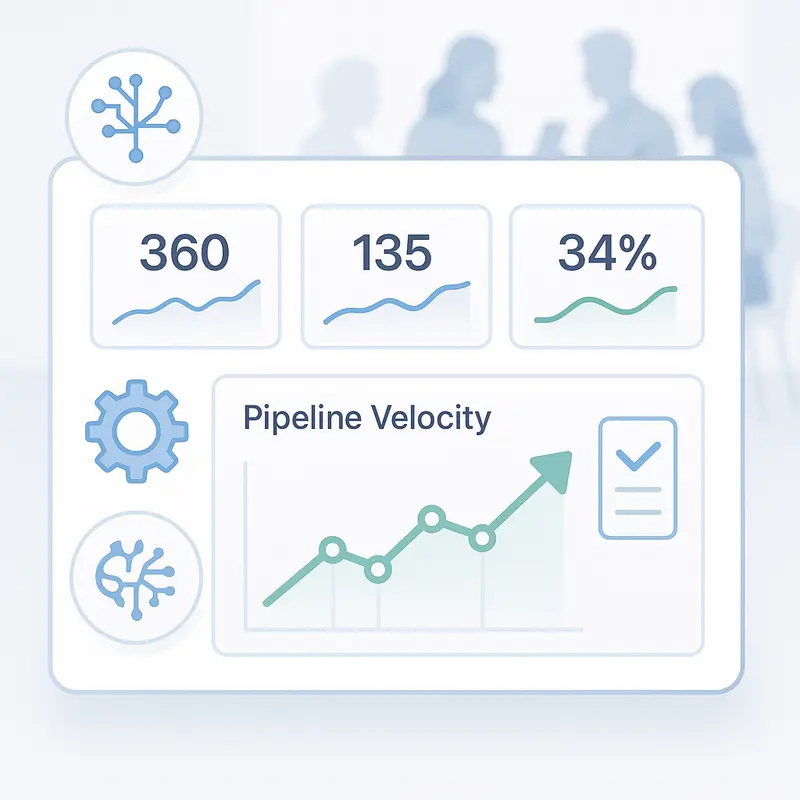
One of the most common breakdowns in predictability is misalignment between sales and marketing. Marketing measures activity — clicks, impressions, form fills — while sales needs qualified opportunities and clear handoffs. The solution is a joint operating model with shared goals, SLAs, and transparent measurement. When marketing and sales have a common definition of a qualified lead and agree on conversion expectations, the organization can reliably predict how marketing activities flow into the sales pipeline.
Operational alignment requires intentional processes. Define what constitutes an MQL, SAL, and SQL for each segment. Put a Service Level Agreement (SLA) in place that specifies response times, volume expectations, and criteria for escalation. For example, an SLA might require sales to follow up with inbound enterprise leads within four hours and to log a disposition in the CRM within 24 hours. These simple operational constraints reduce friction and increase the predictability of conversion rates.
It’s equally important to align incentives. Sales compensation plans should reward predictable behavior (e.g., qualified pipeline generation, conversion of target accounts) rather than only net-new revenue. Marketing compensation — or team-level OKRs — should include pipeline contribution metrics, not just top-of-funnel volume. When both teams are measured against shared revenue goals, cross-functional collaboration becomes the norm rather than the exception.
Service level agreements that work
A practical SLA includes clear definitions (what an MQL looks like), numeric targets (e.g., 200 MQLs/mo for SMB), and consequences (e.g., marketing revises campaigns if MQL-to-SAL rate falls below threshold). Case studies show SLAs improve conversion and reduce lead leakage. The key is to review SLA compliance regularly in a weekly revenue ops meeting and use data—converted opportunities, time-to-contact, and lead-source performance—to iterate the agreement.
Shared dashboards and reporting
Shared, real-time dashboards eliminate ambiguity. Use dashboards that show funnel conversion rates by source, time-to-contact by rep, and pipeline velocity. When both sales and marketing view the same numbers, collaboration improves and corrective actions can be executed quickly. Tools that centralize reporting — from CRM to marketing automation — are indispensable here; consider platforms that integrate well with existing systems such as marketing automation suites and web applications that sync front-end engagement with backend pipeline data.
Tech Stack, Automation, and Data Intelligence
Technology is an accelerant for predictable revenue but it’s not a substitute for process. The right stack removes manual steps, surfaces predictive signals, and democratizes data access. At a minimum, the modern revenue stack includes a CRM, marketing automation, a business intelligence layer, and point solutions for intent data or account-based orchestration. Choose tools that integrate well — fractured data silos create more unpredictability than they solve.
Automation reduces friction and increases speed-to-lead. Simple automations include lead routing rules, email nurture sequences, and alerting for high-intent behavior (e.g., multiple product page views or pricing page visits). More advanced automation leverages AI-driven lead scoring and predictive analytics to prioritize outreach. Organizations that embrace AI in their revenue processes often report improved conversion rates and shorter sales cycles — a result supported by growing adoption rates in industry analysis. For AI-led initiatives and machine learning-based scoring, consider tapping specialized expertise like AI and machine learning solutions to design models that align to your business signals.
Data intelligence turns raw data into decisions. Combine behavioral data (site engagement, email interactions) with firmographic and transactional data to create composite intent scores. Use these scores to trigger specific plays or to escalate accounts to deeper engagement. Importantly, treat these signals as probabilistic — measure their predictive power and refine models over time.
Integration best practices
Integrate systems with robust APIs and standardized data models. Ensure contacts, accounts, and activity histories sync reliably between CRM, marketing automation, and analytics. Introduce a canonical data layer or a single source of truth for pipeline metrics. Poor data hygiene is one of the primary reasons predictable revenue initiatives fail — duplicate leads, mismatched account records, and inconsistent attribution break trust across teams.
Choosing the right automation tools
Not every company needs an enterprise platform; choose based on scale and complexity. Small teams benefit from lean automation that reduces repetitive tasks, while larger organizations require platforms with advanced orchestration and governance. When evaluating tools, prioritize ease of integration, reporting capabilities, and the ability to operationalize experiments quickly. For bespoke needs, building or customizing solutions via custom platforms can be a high-return option that embeds your unique revenue plays into the stack.
Measurement, Experimentation, and Continuous Optimization
Predictable revenue requires continuous learning. Set up a disciplined experimentation program where hypotheses are defined, experiments are run with appropriate controls, and outcomes are measured against predetermined success metrics. The goal is to convert ad-hoc guesses into repeatable insights. Treat each funnel stage as an optimization surface: test page copy, CTA placement, nurture cadences, or pricing anchors, then scale what works.
A/B testing and cohorts are essential. For example, running A/B tests on demo scheduling flows or pricing page layouts can reveal how small UX changes affect conversion rates and pipeline velocity. Use cohort analysis to measure the downstream impact of early funnel experiments — an uplift in demo bookings means nothing if it doesn’t translate into improved close rates or higher LTV.
Key to optimization is instrumentation. Tag events consistently across touchpoints and map them to pipeline outcomes. This enables you to correlate marketing activities (e.g., specific content downloads) with revenue outcomes (e.g., conversion rates and deal size). Over time, build a library of validated experiments and distribute learnings across the organization so improvements compound rather than being repeatedly rediscovered.
“Companies that follow disciplined experimentation and data-driven pipelines can reduce sales cycle length and improve forecast accuracy — making growth investments easier to plan and scale.”
Experimentation playbook
An experimentation playbook includes hypothesis, target segment, sample size, timeline, measurement plan, and success criteria. Document outcomes and operationalize successful variations into playbooks. For example, if a shorter demo script increases conversion by 12% for SMB accounts, update training materials, slide decks, and objection handling guides to reflect the new approach.
Reporting cadence and governance
Institute a weekly revenue ops review and a monthly growth review. Weekly reviews focus on pipeline health and short-term corrective actions; monthly reviews assess experiments, scoreboard trends, and strategic reallocations. Assign ownership for each metric and ensure escalation paths are clear. This governance model creates momentum and ensures small wins are recognized and amplified.
Organizational and Cultural Shifts for Predictable Business Growth
Processes and tools matter, but culture drives execution. Building a predictable revenue system often requires shifting incentives, changing hiring practices, and establishing new rhythms of work. Leaders who create cross-functional accountability — where marketing, sales, product, and finance jointly own revenue outcomes — see faster alignment and better execution. This demands clear communication and visible leadership sponsorship.
Hiring is a critical lever. Look for candidates who understand process, are metrics-oriented, and have experience operating within playbook-driven organizations. For companies that want to scale quickly without increasing fixed overhead, consider dedicated resourcing models or team augmentation to retain agility — partners that provide vetted specialists can help accelerate execution while you ramp internal capability. If you’re evaluating long-term staffing approaches, explore options for hiring a dedicated team to maintain momentum without the overhead of scaling headcount immediately.
Compensation design also reinforces predictable behaviors. Structure sales incentives to reward pipeline quality and consistent conversion rather than just one-off deals. Similarly, tie marketing KPIs to pipeline contribution and cost-efficiency metrics. When compensation and recognition align with desired outcomes, behavior follows more predictably.
Leadership metrics and cadence
Leaders should monitor a small set of forward-looking metrics, such as qualified pipeline coverage, sales velocity, and conversion rates by segment. Regular strategic reviews (quarterly and annual) should validate whether the organization’s investments in channels, tools, and talent are producing predictable outcomes. Transparency — sharing these metrics broadly — builds trust and accountability across teams.
Real-world example: predictable revenue in practice
Consider a mid-market SaaS company that shifted from volume-based marketing to a predictable revenue system. By prioritizing high-intent content, implementing SLAs, and codifying two sales plays for SMB and enterprise, the company improved forecast accuracy by 35% and increased win rates by 18% within nine months. They also reduced customer acquisition cost by reallocating budget from low-performing channels to high-conversion plays. These changes demonstrate how combined process, technology, and cultural adjustments yield measurable improvements.
| Area | Typical Investment | Short-Term Impact | Long-Term Benefit |
|---|---|---|---|
| Marketing Automation | Medium | Faster lead nurturing | Higher MQL-to-SQL conversion |
| Sales Playbooks | Low | Consistent outreach | Lower ramp time |
| AI Scoring & Predictive Analytics | High | Better prioritization | Improved close rates |
| Custom Integrations | High | Consolidated data | Scalable reporting |
Action Plan: First 90 Days to Start Building Predictable Revenue

Turning theory into practice requires a focused ninety-day plan. Start by auditing your current funnel and identifying the three biggest bottlenecks (e.g., lead quality, time-to-contact, low demo-to-close conversion). Assign owners from marketing, sales, and ops to each bottleneck and set clear, measurable goals for improvement. For instance, aim to improve MQL-to-SAL conversion by 10% or reduce time-to-first-contact to under four hours for high-value leads.
During this period, implement low-friction changes that create immediate impact: standardize lead qualification criteria, create one or two documented sales plays, and set up a shared dashboard that captures the core funnel metrics. At the same time, begin technology workstreams that require more time but are essential for scale, such as integrating marketing automation with CRM and establishing a canonical data model for contacts and accounts. Where custom integrations or product work is needed, partnering with teams that build robust web applications and integrations pays dividends.
Finally, establish the cadence of governance and the experiment backlog. Schedule weekly pipeline reviews, a monthly experiment review, and a quarterly strategy review. Populate the experiment backlog with prioritized tests that map directly to revenue impact — for example, a pricing experiment for mid-market customers or a nurture sequence test for high-intent prospects. With these steps, you convert intent into near-term improvements while building the foundation for long-term predictability.
Measuring Success and Scaling Predictable Growth
Success for a predictable revenue system is not a single metric — it’s a constellation of improvements across conversion rates, velocity, and value. Start with a KPI scorecard that includes: pipeline coverage (target: 3x expected quota), conversion rates at each funnel stage, average deal size, sales cycle length, CAC payback period, and churn/LTV. Track these month-over-month and by cohort to identify sustainable trends rather than one-off spikes.
Scaling predictable growth involves reinvesting in what works. Use your measurements to reallocate marketing spend to channels with the best qualified conversion and to hire for roles that accelerate the most valuable plays. For companies that need extra capacity to execute quickly, consider accelerated resourcing via hiring a dedicated team to run experiments and maintain momentum while internal teams scale knowledge and capability.
Finally, document everything. A playbook library, a clearly maintained dashboard, and a repository of experiment results become organizational memory that ensures growth can continue even as people change. The compound effect of small, repeatable improvements yields predictable revenue growth that is more defensible and scalable than any single campaign or channel.
For firms that want to accelerate the conversion of marketing activity into dependable pipeline, partnering with specialists across technology and creative design often accelerates outcomes. Services such as conversion optimization and creative design support the experiments and content changes that improve funnel efficiency. For more comprehensive implementations, teams that deliver integrated solutions across marketing automation, analytics, and sales enablement can reduce time-to-value substantially — for example, combining targeted creative with automated nurture flows often reduces MQL-to-opportunity time by weeks.
Conclusion
Building a predictable revenue system is a strategic investment that changes how an organization plans, executes, and scales growth. It requires thoughtfulness across three domains: process (clear plays and governance), people (aligned incentives and capable hires), and technology (integrated tools and automation). When these elements are orchestrated, companies move from reactive growth tactics to a reliable engine that produces sustainable revenue. The result is better forecasting, lower cost of acquisition, and an organization capable of executing long-term strategy with confidence.
If your goal is sustainable business revenue growth strategy, start by auditing your funnel, setting a small set of leading KPIs, and implementing a 90-day plan focused on the largest bottlenecks. Consider working with partners who can accelerate core capabilities — from building integrations and web applications to deploying AI-based scoring with AI and machine learning solutions. For fast scaling without the fixed cost of hiring, explore the option to hire a dedicated team that can implement playbooks, run experiments, and hand over mature processes to your internal crew.
Further Reading & References
- Research and market data: Statista
- Data-driven growth insights: McKinsey & Company
- Inbound and predictable revenue practices: HubSpot
- Business and leadership context: Forbes
Frequently Asked Questions
Build a Predictable Revenue System.
What exactly is a predictable revenue system and why do I need one?
A predictable revenue system is a repeatable framework that converts marketing and sales activities into reliable revenue, using defined playbooks, aligned KPIs, and automation. You need it to forecast cash flow, reduce variance in sales, and scale the business without guesswork.
How do I choose the right metrics for my revenue generation strategy?
Start with a small set of leading indicators tied to revenue: MQL-to-SAL conversion, SAL-to-opportunity rate, average deal size, sales cycle length, and CAC payback. Segment these by customer type and run cohort analyses so metrics reflect real behavioral differences.
Can automation and AI make my revenue more predictable?
Yes — automation streamlines handoffs and nurtures leads at scale, while AI can improve lead prioritization through predictive scoring. However, both work best when integrated into disciplined processes and validated with experiments.
How quickly can we see improvements after implementing a predictable revenue system?
You can often see measurable improvements in 60–90 days after addressing high-impact bottlenecks (e.g., faster follow-up, better qualification), but full maturation of systems and cultural changes typically takes 6–12 months.
Should we hire internally or use an external team to build our revenue system?
It depends on speed and capacity. Hiring a dedicated internal team builds long-term capability, while external specialists or a hired dedicated team can accelerate implementation and run experiments while your org ramps up knowledge.
Ready to stop relying on lead volume and start producing predictable revenue?
Contact experts who can help you map a customized revenue generation strategy, build the necessary systems, and operationalize growth. If you want to explore targeted optimizations, consider services such as conversion rate optimization for funnel improvement or marketing automation to scale nurture and orchestration. When strategy, technology, and culture align, predictable business growth becomes an operational capability rather than an aspiration.
- No commitment required
- Detailed technical roadmap
- Customized to your infrastructure
By submitting this form, you agree to our privacy policy. · 4,000+ businesses served · 24hr response · 98% satisfaction