Enterprise AI & Automation Agency | Eplanet Soft
Build a Scalable Lead Generation System for Growth in 2026
Learn how to design a scalable lead generation system in 2026: automation, tech stack, B2B tactics, and ROI measurement. Start scaling your pipeline today.
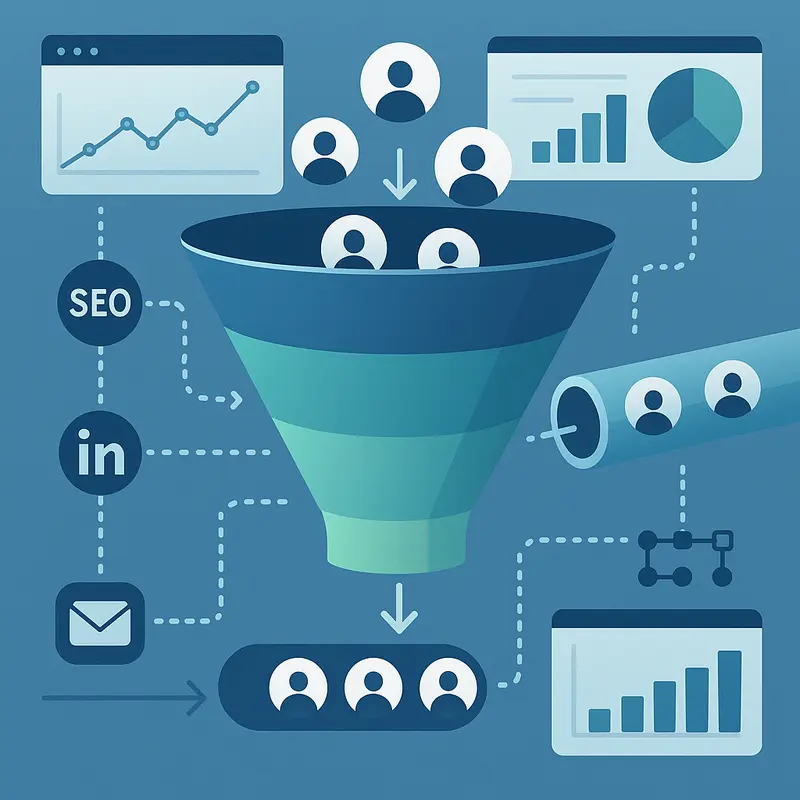
In 2026, a modern business can’t rely on ad-hoc outreach, one-off campaigns, or manual spreadsheets to meet sustained growth targets. Companies that win are those that architect a repeatable, measurable, and automated lead generation system — one that scales with traffic, increases conversion rates, and aligns sales and marketing around predictable outcomes. Whether you’re upgrading an existing funnel or building a new marketing funnel system, this guide walks through the strategy, technology, and processes required to build a high-performance, scalable lead generation system designed to generate quality leads consistently.
This article is for growth leaders, marketing directors, founders, and B2B sales teams who need a blueprint to move from reactive tactics to a strategic, automated lead generation process. You’ll get practical frameworks, channel-by-channel guidance, recommended tools, and real-world examples that show how to combine content, automation, AI, and human follow-up into a cohesive business lead generation strategy that delivers measurable ROI. We’ll also cover how to adapt for both B2B lead generation systems and B2C contexts where volume matters.
Throughout this guide you’ll learn how to build an automated lead generation system with clear handoffs between marketing and sales, how to design multi-channel funnels that reduce cost-per-lead as volume increases, and which KPIs to track at every stage of the funnel. We’ll reference industry data and best practices so you can justify investments in marketing automation, AI, and analytics when presenting to stakeholders.
Read on to discover a step-by-step blueprint, channel comparisons, a recommended tech stack, and the operational playbook you’ll need to scale lead generation in 2026 and beyond — including examples and internal resources like ways to integrate professional SEO services and web applications into your pipeline.
Why Scalable Lead Generation Matters in 2026
Scalable lead generation is not just about producing more leads — it’s about producing more high-quality, sales-accepted leads as your company grows, without linear increases in cost or headcount. In the context of 2026, buyer behavior and channel economics have continued to evolve: buyers self-educate with content, prefer asynchronous buying paths, and expect personalized experiences across touchpoints. A scalable lead generation system must therefore be data-driven, automated, and adaptable, ensuring that increased volume does not degrade lead quality or the customer experience.
One fundamental reason scalability matters is predictable revenue planning. When your marketing funnel system consistently converts at known rates at each stage, forecasting becomes reliable. This predictability allows leadership to tie marketing investments to customer acquisition cost (CAC), lifetime value (LTV), and payback periods — metrics critical to fundraising, budgeting, and growth planning. For B2B organizations selling higher-ticket solutions, a predictable pipeline also shortens sales cycles by ensuring leads receive the right educational content at the right moment, reducing manual qualification overhead.
Another reason is competitive advantage. Scalable systems let you test hypotheses rapidly, iterate on messaging, and optimize channel mix with real-time analytics. Companies that implement robust automation and AI-driven personalization centralize learning from every touchpoint, enabling them to reduce cost-per-lead while improving conversion rates. According to recent industry reporting, marketers who combine automation with analytics see meaningful uplifts in efficiency; integrating these capabilities early is a differentiator that compounds over time.
Finally, scalability supports organizational growth without proportionally scaling costs. By investing in reusable assets — content hubs, templates, nurture sequences, and integrated tracking — you create a flywheel where each successful campaign informs the next. This approach contrasts sharply with tactical marketing that requires starting from scratch each quarter. When you build a true automated lead generation system, you transform one-off wins into sustained performance.
The business case for investing in scale
Investments in scalable systems are easiest to justify when tied to unit economics. For example, if automation reduces lead qualification time by 40% and increases conversion-to-opportunity by 20%, the combined impact on pipeline velocity and cost-per-acquisition can pay back tools and integrations within months. Use cohort-based analysis to model the impact on LTV and CAC and present a three- to nine-month payback scenario to stakeholders. These projections make it easier to secure budgets for tools, integrations, and talent.
Practical example: a B2B SaaS company that moved from manual CRM processes to an integrated marketing automation and AI lead scoring system saw a 2x increase in marketing-qualified leads (MQLs) and decreased the average time-to-product-demo by 30%. The result was a faster sales cadence and a measurable reduction in CAC over 12 months.
For digital-first businesses, scalable lead generation is the infrastructure of growth — like the rails a train runs on. If those rails are weak, the train stops. Build them strong and growth becomes inevitable.
Designing Your Automated Lead Generation System
Designing an automated lead generation system begins with clear mapping of the buyer journey and the handoffs between touchpoints. Start by defining the stages of your marketing funnel system: Awareness, Interest, Consideration, Intent, Purchase, and Advocacy. For each stage, document the content types, channels, lead magnet offers, and conversion events you need. This mapping creates clarity about where to apply automation: for traffic acquisition, lead capture, qualification, nurture, and routing to sales.
Next, build standardized conversion assets. These are the lead magnets, landing pages, chat flows, and interactive calculators that produce leads predictably. A common pattern in scalable systems is to create modular content blocks (e.g., case studies, ROI calculators, checklist PDFs) that can be assembled into multiple offers and landing pages. This modular approach reduces production time and creates consistent branding and messaging across campaigns.
An automated lead generation system must integrate capture and routing. Use form handlers, chatbots, API-based integrations, and tracking pixels to ensure every captured lead flows into your CRM and triggers downstream automation. Automation covers lead scoring, enrichment (e.g., pulling firmographic data), nurture sequences, and alerts for sales outreach. The goal is to reduce manual data entry and ensure sales teams only get leads that meet predetermined qualification thresholds.
Finally, implement feedback loops. Your system should measure outcomes and feed those insights back to content and channel teams. Automation without feedback becomes stale; the best systems automatically update lead scores based on engagement signals and close-the-loop reporting that ties leads back to revenue. When you have this level of measurement, you can scale channels that work and shut down or optimize those that don’t, preserving budgets and improving ROI.
Core components of an automated system
Every system needs a few core components to scale: a traffic layer (ads, organic search, partnerships), a capture layer (forms, chat, gated content), an automation engine (marketing automation or workflow platform), a CRM with sales workflows, and analytics to measure funnel performance. For integrated development of these components, teams might turn to web applications for custom capture flows and to AI and machine learning solutions for intelligent lead scoring and personalization.
Choose technologies that support two-way data flow so actions in the CRM can trigger personalized marketing, and marketing signals can update CRM records. Avoid one-way integrations that create silos and manual reconciliation. Instead, aim for a platform approach where your automation engine, CRM, and analytics speak a common language via APIs and event streams.
Building a B2B Lead Generation System: Channels & Tactics
B2B lead generation systems require a different emphasis than high-volume B2C funnels. B2B buyers are often account-based, longer-cycle, and research-driven. That means channel mix and content strategy should prioritize authority building, thought leadership, and multi-touch outreach. Start by identifying high-value accounts and mapping content to decision-maker personas. Combine targeted inbound tactics with account-based marketing (ABM) outreach for best results.
Organic search and SEO are foundational to B2B lead generation. Investment in domain authority, technical SEO, and content that addresses buyer questions pays dividends because B2B buyers rely heavily on search during the research phase. Pair SEO with gated technical assets like ROI calculators, solution briefs, and recorded webinars that capture qualified leads. Integrating professional SEO services ensures your content is discoverable and optimized for conversion.
Paid channels — including LinkedIn, Google Ads, and programmatic display — are useful for scale and targeting. LinkedIn remains the most effective paid channel for reaching senior B2B decision-makers with specific job titles and company sizes, while Google search ads capture high-intent prospects actively searching for solutions. Use a multi-touch attribution model to understand how paid channels assist conversions and to avoid over-crediting last-click channels.
Content syndication and partnerships can accelerate pipeline development by leveraging existing audiences. Syndicating thought leadership to niche industry publications, participating in joint webinars with complementary vendors, and offering exclusive research in partnership with associations helps reach target accounts at scale. These tactics are most effective when integrated into your nurture and scoring frameworks, ensuring leads from syndication are routed and nurtured appropriately.
Channel comparison table
| Channel | Best for | Scale | Typical CAC Impact | Example Tactics |
|---|---|---|---|---|
| Organic SEO | Top-of-funnel discovery | High (long term) | Low (over time) | Blog content, pillar pages, technical SEO |
| LinkedIn Ads | Targeted B2B reach | Medium | Medium-high | Sponsored content, InMail, Lead Gen Forms |
| Google Search | High intent capture | Variable | Medium | PPC, branded/conversion campaigns |
| Email Marketing | Nurture & retention | High | Low | Drip sequences, re-engagement |
| Content Syndication | Rapid reach into verticals | Medium | Medium | Sponsored research, co-marketing |
Real-world example: a mid-market software vendor combined targeted LinkedIn campaigns with a gated webinar and an SEO-driven content hub. The webinar attracted 400 registrants; 22% converted to trials after a three-step nurture sequence integrating product demos and case studies. By linking webinar engagement to lead scoring, they prioritized outreach to the most active accounts and improved sales conversion rates substantially.
Technology Stack: Tools, Platforms & Integrations
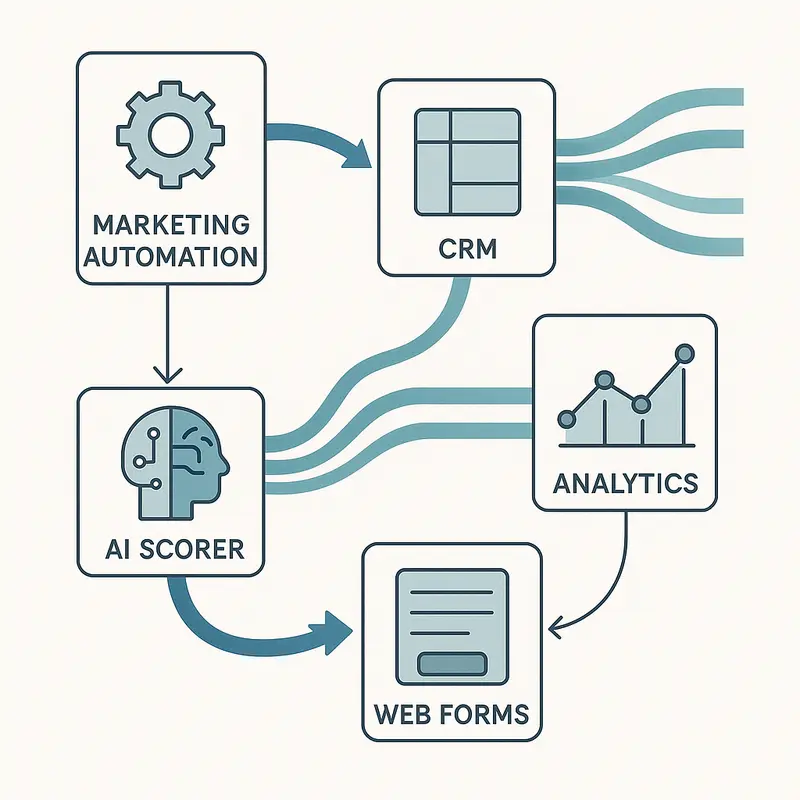
The right technology stack is the backbone of any automated lead generation system. In 2026, the stack typically includes a marketing automation platform, a CRM, an analytics/BI layer, identity enrichment tools, and AI-driven personalization engines. Cloud-native, API-first tools reduce integration friction and allow you to swap components without disrupting the entire system. When selecting tools, prioritize vendor stability, API maturity, and the ecosystem of integrations.
Common choices include marketing automation platforms for campaign orchestration and email nurture; CRMs for contact and opportunity management; analytics tools for funnel measurement; and specialized tools for enrichment, chat, and personalization. Many companies also build or extend web applications for custom capture flows, calculators, and customer portals that integrate directly with marketing automation and CRM systems.
AI and machine learning are central to scalable systems in 2026. Use AI for lead scoring, predictive propensity models, and content personalization. These capabilities reduce manual qualification and improve conversion by surfacing the highest-propensity leads to sales. Consider partnering with external vendors or AI and machine learning solutions teams to build tailored models that reflect your business rules and historical data rather than relying solely on out-of-the-box scoring.
When planning integrations, create a data architecture that supports event-driven flows. For instance, capture click and content-consumption events in an events platform, use enrichment APIs to append firmographics, and trigger nurture sequences based on combined behavioral and firmographic scores. This architecture ensures your automated lead generation system is responsive and can scale as event volumes increase.
Sample tech stack and roles
- Marketing Automation: campaign orchestration, email, workflows
- CRM: contact records, opportunity management, sales workflows
- Analytics/BI: funnel dashboards, cohort analysis, revenue attribution
- Enrichment/Intent Data: firmographic enrichment, account intent signals
- Personalization/AI: dynamic content, predictive lead scoring
- Web & Forms: landing pages, form handlers, interactive tools
Example roles to staff a technical operation: product-owner for marketing systems, marketing operations engineer, data analyst, content strategist, and a sales enablement lead. If you need to expand quickly, consider hiring contractors or a partner to stand up the initial stack and hand it over to an internal operations team. You can also augment with dedicated resources like hire a dedicated team for long-term execution.
Optimization: Nurturing, Scoring, and Conversion
Optimization is where the scalable lead generation system earns its keep. Nurturing sequences should be designed to move leads through the funnel while learning from signals. Use progressive profiling to collect incremental data without high friction. Combine content-driven nurturing (case studies, ROI calculators, demos) with sales touchpoints for leads that show intent. The key is to automate as much as possible while keeping sales interventions highly targeted and timely.
Lead scoring should be dynamic and multi-dimensional. Create a scoring matrix that blends demographic/firmographic fit, behavioral engagement, and intent signals. For example, a lead from a target industry with multiple downloads and recent product-page visits should score higher than a single-form submitter. Update scoring thresholds as you collect conversion data — a good practice is to review and recalibrate every 30-60 days during the early stages of implementation.
Conversion optimization extends beyond landing pages to include the timing and channel of outreach. Test different cadences for email nurture, varied subject lines, and multi-channel sequences that combine email, chat, and targeted ads. Use A/B testing and multivariate experiments to understand which combinations produce the most sales-accepted leads. Conversion rate optimization specialists and teams focusing on UX can turn incremental improvements into significant pipeline lifts.
Practical example: a B2B firm tested a change from a generic demo CTA to a personalized ROI calculator on their pricing page. The personalized experience increased demo requests by 45% and improved the quality of inbound opportunities because buyers could self-quantify ROI before requesting sales time. This small change had an outsized impact on the conversion rate at a critical funnel juncture.
Testing and feedback loops
Design feedback loops that connect sales outcomes to marketing actions. Tag leads in your CRM with disposition codes (e.g., unmet criteria, budget issue, competitor preference) and route these reasons back to marketing for creative optimization. Use analytics to identify drop-off points and run experiments to test hypotheses — for instance, if trial drop-offs spike at onboarding, introduce pre-onboarding educational content and measure retention impact.
Also consider automated playbooks: when a lead crosses a threshold, immediately trigger a specific sequence (e.g., invite to a live demo, send a tailored case study, or activate a sales sequence). This approach ensures high-propensity leads receive the right mix of automation and human touch at scale.
Measuring ROI and Analytics for Scalability
Measuring ROI is essential to scaling any lead generation process. Define clear KPIs at each funnel stage: traffic, leads, MQLs, SQLs, opportunities, win rates, average deal size, and CAC. Use a consistent attribution model — first-touch, last-touch, or, preferably, data-driven multi-touch attribution — to understand how channels contribute to pipeline and revenue. The choice of attribution model should reflect your sales cycle: multi-touch is usually better for B2B because of complex buyer journeys.
Set up dashboards that tie marketing activities to outcomes. Your analytics should show not only volume metrics but conversion velocity and predictive signals. Cohort analysis helps you understand how different acquisition sources perform over time and whether the quality of leads from a given channel improves or declines. This enables budget reallocation to channels with improving LTV/CAC ratios and faster payback periods.
Use experiment design and lift analysis to measure incremental impact. For paid channels, run holdout experiments or geo-based split tests to determine the true incremental value of campaigns. For nurture and content, randomized control trials help isolate the impact of a sequence or asset on conversion and revenue. These scientific approaches are important because surface-level metrics like clicks or downloads don’t always equate to pipeline impact.
Example metrics dashboard items: pipeline created by channel (last 90 days), conversion rate by funnel stage, lead-to-opportunity velocity, average deal size by acquisition channel, and CAC payback period. Ensure finance and sales leadership agree on definitions of MQL and SQL so reporting aligns with revenue recognition and forecasting.
“Marketing leaders who tie campaign performance to revenue per lead are 3x more likely to scale sustainably,” — internal performance benchmarks and industry findings.
Scaling Teams, Processes, and Outsourcing

Scaling lead generation is as much organizational as it is technological. Once your system is built, you must scale people and processes to support sustained growth. Start by documenting standard operating procedures for campaign launches, lead routing, scoring updates, and reporting. Clear responsibilities reduce bottlenecks and make it easier to onboard new team members or external partners.
Decide which functions to keep in-house and which to outsource. Core strategy, brand voice, and product messaging are typically internal, while executional workloads like creative production, platform integrations, and campaign execution can be augmented with external talent. For long-term ramp speed, consider options such as hiring specialized contractors, engaging agencies for campaign work, or building a mixed team: internal strategists plus a long-term outsourced execution partner.
Staffing models to consider include centralized growth teams that own cross-channel execution and distributed channel specialists embedded in product lines. For organizations that need rapid scale, hiring models such as hire a dedicated team or using fractional specialists can shorten time-to-value. When augmenting staff, build explicit onboarding playbooks so contractors can follow established processes and maintain quality.
Operational governance is critical. Implement a campaign review calendar, weekly performance stand-ups, and monthly retrospectives. These rituals ensure continuous improvement and accountability as the system scales. As volumes grow, add automation to manage workloads — for example, automatic lead routing and triage, templated campaign builds, and self-serve creative libraries to speed execution without additional headcount.
Outsourcing vs. in-house: decision checklist
- Core competency: Keep strategic control of brand and messaging in-house.
- Speed to scale: Outsource tactical execution and creative production when speed matters.
- Cost-efficiency: Use outsourced specialists for niche skills (e.g., advanced analytics or paid media optimization).
- Knowledge transfer: Ensure vendors document processes and train internal teams for eventual handover.
Example: a fast-scaling startup used an outsourced demand generation agency for initial campaign launches while building an internal growth team. Over 18 months, the in-house team took over core campaign strategy while the agency remained a partner for peak-season execution and advanced analytics.
Key Takeaways
Key Takeaways
- Build a repeatable marketing funnel system: map buyer stages and design capture + nurture for each stage.
- Automate data flows: integrate forms, CRM, marketing automation, and analytics to reduce manual work and scale reliably.
- Use multi-channel acquisition: combine SEO, paid media, content syndication, and ABM to reach and convert target accounts.
- Leverage AI for scoring & personalization: predictive models and dynamic content boost conversion and reduce manual qualification.
- Measure incrementally: use cohort analysis, multi-touch attribution, and experiments to prove ROI and optimize channels.
- Scale people and processes: document SOPs, implement governance, and leverage dedicated teams or partners to accelerate growth.
Conclusion: From System to Sustainable Growth
Building a scalable lead generation system in 2026 requires a mix of strategic clarity, executional discipline, and the right technology. Start by mapping your funnel and identifying the conversion assets you need; then assemble a stack that supports automation, measurement, and AI-driven personalization. Invest in modular content, clear handoffs between marketing and sales, and feedback loops that allow continuous improvement. Remember that scaling is both technical and organizational — the best systems are backed by documented processes and teams that can execute at pace.
If your organization is ready to move from sporadic campaigns to a predictable pipeline, consider piloting a focused initiative: assemble a cross-functional team, launch a high-impact channel (e.g., SEO + gated content), and measure revenue impact over 3–6 months. Use those outcomes to secure broader investments. If you want hands-on help building or scaling the technical components of your lead generation system — from SEO activation and conversion optimization to custom integrations and web application development — our teams can help accelerate implementation and deliver measurable pipeline results.
Further Reading & References
For industry context and benchmark data, see resources from leading research and marketing organizations:
- HubSpot: Lead Generation Best Practices — practical tactics and benchmarks for modern inbound
- Statista: Lead Generation Overview — market data and trends for digital lead generation
- McKinsey: Marketing & Sales Insights — research on buyer behavior and sales effectiveness
Frequently Asked Questions
Build a Scalable Lead Generation System for Growth in 2026.
What is a scalable lead generation system and why does my business need one?
A scalable lead generation system is a repeatable, automated set of processes, tools, and content that reliably produces qualified leads as your business grows. It reduces manual effort, improves predictability, and enables you to increase lead volume without a proportional rise in cost or headcount — essential for planning revenue and optimizing CAC.
Which channels should I focus on for a B2B lead generation system in 2026?
For B2B, prioritize organic SEO for discovery, LinkedIn and search ads for targeted intent capture, email for nurture, and content syndication or partnerships for rapid reach into verticals. The optimal mix depends on your ICP; use experiments and attribution to allocate budget to channels that produce the best LTV/CAC.
How important is marketing automation and AI in an automated lead generation system?
Marketing automation is essential for orchestrating campaigns, routing leads, and running nurture sequences at scale. AI enhances automation by improving lead scoring, personalization, and predictive insights. Combined, they reduce manual qualification and increase conversion rates, making the system more efficient and scalable.
How do I measure the ROI of my lead generation process?
Measure ROI by tracking funnel metrics (traffic, leads, MQLs, SQLs, opportunities, wins) and tying them to revenue. Use multi-touch attribution or controlled experiments to determine incremental impact, and monitor cohort LTV/CAC and payback period to evaluate long-term effectiveness.
Should we build our lead generation stack in-house or outsource components?
Keep strategy, brand, and core messaging in-house while outsourcing executional workloads like creative production, integrations, or advanced analytics if speed or expertise is lacking. A hybrid model often works best: internal ownership of strategy with partners to accelerate scaling and execution.
How can I ensure lead quality as I scale volume?
Maintain lead quality by implementing dynamic lead scoring that blends fit and intent signals, using progressive profiling, and applying enrichment data. Automate qualification rules and set clear SLA handoffs between marketing and sales so only sales-accepted leads are pursued aggressively.
Ready to turn your growth goals into a scalable, automated lead generation system?
Reach out to discuss a tailored plan and the right mix of technology, talent, and tactics to meet your targets — or explore our services to find the best fit for your stage of growth. Contact us to start building a predictable pipeline today.
- No commitment required
- Detailed technical roadmap
- Customized to your infrastructure
By submitting this form, you agree to our privacy policy. · 4,000+ businesses served · 24hr response · 98% satisfaction