Enterprise AI & Automation Agency | Eplanet Soft
How B2B Businesses Can Generate High-Quality Leads in 2026
Discover proven B2B lead generation strategies for 2026 to generate high-quality leads online. Learn tactics, AI tools, and measurable processes to scale growth.

Generating high-quality B2B leads in 2026 requires more than old tricks and one-off campaigns — it demands a coordinated mix of data-driven intelligence, personalization at scale, and channel sophistication. As buyer expectations evolve and digital-first procurement becomes the norm, B2B marketing teams must rebuild their playbooks around relevance, velocity, and measurable impact. In this guide, we present practical, proven B2B lead generation strategies to help you generate B2B leads online and convert them into predictable revenue streams.
We’ll explore the changing buyer landscape, the best-performing channels for high quality lead generation, and how to use content, SEO, account-based marketing (ABM), and AI to raise lead intent while reducing acquisition costs. Whether you lead a marketing team at an enterprise or are a growth-oriented SMB, these tactics are designed to be operationalized with clear KPIs, technology choices, and real-world examples.
Throughout the article you’ll find actionable frameworks, a comparative channel table, and concrete measurement plans so you can prioritize initiatives that deliver measurable ROI. We also link to specialized services — from professional SEO services to AI and machine learning solutions — that can accelerate execution if you’re scaling quickly. Read on to learn the B2B marketing strategies that will dominate lead generation in 2026 and how to apply them in your organization.
The Evolving B2B Buyer in 2026: Expectations and Implications
The modern B2B buyer is digital-first, self-educating, and expects a buying experience that mirrors best-in-class B2C journeys. Research shows a significant portion of the buyer journey occurs before a prospect ever speaks to sales — often 60-80% — meaning marketing must surface the right content at the right time to influence decisions. This shift elevates the importance of intent data and content relevance; buyers are not just looking for product specs, they want context, ROI substantiation, and proof points tailored to industry and role.
For marketers, this translates to higher expectations around personalization and contextual engagement. Buyers expect content formats that match their preferences — from short video explainers and interactive ROI calculators to long-form case studies and product demos. Providing these assets in a progressive, gated manner improves lead quality: high-intent buyers will exchange contact details for deep, decision-enabling content, while lower-intent traffic self-educates and nurtures. The goal is to enrich profiles with behavioral signals so you can prioritize outreach by value not just volume.
Finally, the buyer’s procurement process is increasingly collaborative and cross-functional. Multiple stakeholders participate, and decisions are often consensus-based. This means lead generation is not a one-dimensional volume metric; true high quality lead generation in 2026 involves surfacing buying centers, mapping stakeholders, and crafting account-level narratives that align functional priorities (IT reliability, procurement risk, finance ROI) with the value your solution delivers. These changes force marketers to integrate content, data, and sales processes into a unified funnel.
High-Impact B2B Lead Generation Strategies: Omnichannel Playbook
To generate B2B leads online effectively, you must activate a diversified set of channels that work together to identify intent, capture lead signals, and nurture prospects through complex buying cycles. Relying solely on inbound content or paid search is no longer sufficient — high-quality lead generation requires an orchestration of channels where each touch adds signal and moves the prospect toward conversion. Think of channels as layered: top-of-funnel discovery via content and social, mid-funnel education via webinars and ABM, and bottom-funnel conversion via sales-led demos and trials.
Top-performing B2B organizations deploy a mix of organic SEO, targeted paid marketing, and precision outreach using ABM. Organic content builds trust and scale, paid campaigns deliver targeted reach and test creative and messaging quickly, and ABM provides focus for high-value accounts. Social platforms like LinkedIn continue to be critical for professional targeting, while programmatic display and retargeting keep your brand visible during decision windows. Integrating these channels with a robust lead scoring model ensures marketing efforts prioritize leads with the highest propensity to convert.
Execution requires rigorous campaign design and measurement. Use segmented audiences, dynamic ad creative, and landing pages that speak directly to the persona and use case being targeted. For example, a landing page for CTOs should emphasize architecture, security, and integrations, while a CFO-facing page highlights cost savings, total cost of ownership, and compliance benefits. If execution speed is a constraint, consider partnering with specialists for campaign build-out and optimization — for instance, if you need paid marketing support or to build a bespoke web funnel through web applications, external expertise can shorten time-to-value.
Channel Mix Recommendations for 2026
No single channel will outperform for every company. Recommended mixes often depend on average deal size, sales cycle length, and industry. For mid-market SaaS with 6-12 month cycles, a balanced approach of 40% organic SEO & content, 30% paid search and social, 20% ABM/outbound, and 10% events/webinars tends to work. For enterprise sales with long cycles, ABM and sales enablement take a higher share. Always pilot small, measure signal-to-close, and then scale channels that demonstrate high lead-to-opportunity conversion.
Example: A Coordinated Campaign
Consider a campaign targeting logistics companies for an AI-based route optimization product. Start with thought leadership SEO content and a LinkedIn sponsored content push to directors of operations. Use gated calculators (mid-funnel) to capture engagement and score leads, then initiate hyper-personalized ABM outreach to top accounts with case studies and an invitation to a live demo. Track engagement signals and hand off only leads meeting engagement thresholds to sales. This kind of cross-channel funnel raised qualified lead rates by 28% for similar B2B campaigns in 2024, according to internal benchmarks from high-growth firms.
Content, SEO, and Demand Engines: Generate B2B Leads That Convert
Content remains the engine of high quality lead generation because it builds authority, captures organic demand, and nurtures prospects across long buying cycles. In 2026, SEO is no longer just about keywords — it’s about topic authority, search intent alignment, and content experience. Search engines increasingly reward content that thoroughly answers complex queries and provides structured, interactive assets that aid decision-making. For B2B, this means producing deep industry reports, ROI calculators, playbooks, and technical implementation guides — resources that buyers will reference and share internally.
A strategic content plan pairs pillar pages with topic clusters to dominate semantic relevance for priority queries. For instance, a pillar on “Supply Chain Optimization” can link to cluster pages covering “AI routing,” “TCO calculators,” and “savings case studies.” This structure improves crawlability, internal linking, and user sessions — all positive SEO signals. Use the content to capture first-party data through progressive profiling: start with minimal friction (email) and progressively request more details (company size, role) as the prospect engages with premium assets.
High-quality content should be optimized for conversion: clear CTAs, gated assets with tailored forms, and follow-up automation that assigns leads to nurtures or sales outreach based on score. If you need specialist help to implement content strategies at scale, consider pairing your internal team with external resources like professional SEO services for content architecture and technical SEO, and creative design or UI/UX design expertise for asset experience. (Note: internal links to creative service pages should match available site paths.)
SEO Tactics That Increase Lead Quality
Prioritize long-tail, intent-rich queries over broad head terms. Long-tail queries often indicate research-stage or purchase-intent and convert at higher rates when matched with targeted content offers. Implement structured data (schema.org) for product, FAQ, and review snippets to increase SERP real estate and CTR. Additionally, focus on page experience — fast load times, mobile responsiveness, and accessible design — because usability directly impacts conversion. Use A/B tests on content layout and CTAs to identify which combinations yield higher MQL-to-SQL ratios.
Case Study: Content-Led Lead Generation
A B2B software company producing a comprehensive annual industry benchmark report saw a 3x increase in sales-qualified leads when the report was gated and supported by a webinar series. The sequence: organic promotion, paid social to targeted personas, a dedicated landing page with a persuasive form, and webinar follow-ups to present live ROI scenarios. The combination of high-value content and live engagement accelerated lead qualification and shortened the sales cycle by nearly 15% in that pilot.
Account-Based Marketing and Personalization: Targeting High-Value Opportunities
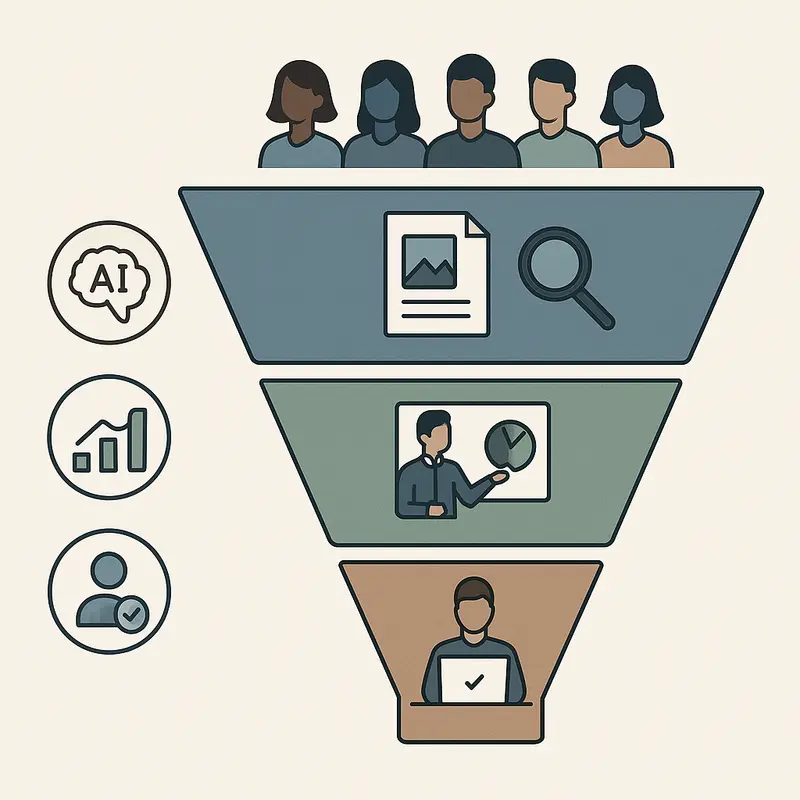
Account-Based Marketing (ABM) remains one of the most effective frameworks for high quality lead generation for businesses with larger deal sizes or clearly defined target account lists. ABM flips the funnel: instead of waiting for leads to self-identify, you proactively create tailored campaigns for named accounts and buying centers. The result is higher conversion rates and stronger pipeline predictability when ABM is executed with precision — combining targeted content, personalized creative, and aligned sales outreach.
Successful ABM programs blend intent data, firmographic filters, and human insights. Use intent platforms and first-party behavioral signals to identify accounts exhibiting in-market signals (e.g., repeated content consumption, downloads, or searches for relevant solution terms). Then, deploy a coordinated outreach plan: personalized ads for decision-makers, direct mail or digital experience kits, and multi-touch email sequences that reflect the account’s use case, industry pain points, and measurable outcomes. Sales should be looped in early to align on playbooks for outreach and follow-up.
ABM works best when supported by tailored experiences. That means custom landing pages per account segment, bespoke content (case studies highlighting similar customers), and executive-level webinars or roundtables where your solution vision is presented in a peer context. For organizations struggling to execute ABM at scale, consider tech stacks that automate personalization and orchestration, or partner with agencies that specialize in account-focused campaigns. Internally, ensure you have a centralized account dashboard that tracks engagement, intent signals, and next-step playbooks.
ABM at Scale: Tools and Tactics
Key tools for ABM include intent data platforms, dynamic creative ad servers, and CRMs that support account hierarchies. Orchestration platforms can push account-specific content to sales reps’ workflows and trigger programmatic ads. Tactically, start with a pilot of 20-50 accounts, build creative templates that can be personalized, and iterate quickly based on time-to-engagement and conversion metrics. A well-executed ABM pilot provides the operational playbook to scale across thousands of accounts without losing personalization fidelity.
Example: ABM Success Story
An enterprise cybersecurity vendor used ABM to win deals in a target vertical by combining threat intelligence content, role-specific landing pages, and executive roundtables. The focused campaign increased engagement at targeted accounts by 65% and generated a 42% higher win rate compared to prior outbound efforts. Critical success factors were the tailored messaging, sales alignment, and rapid handoffs when engagement thresholds were met.
Leveraging AI, Data Intelligence, and Automation for Lead Quality
AI and machine learning are no longer niche tools — they are foundational to modern lead generation strategies. AI can improve lead scoring, predict propensity to buy, personalize content in real time, and automate outreach sequencing. When used responsibly, AI helps B2B marketers find signal in noise: it surfaces accounts that resemble best customers, identifies the next-best action, and reduces manual effort so teams can focus on high-value interactions with qualified prospects.
Data intelligence complements AI by centralizing signals from CRM, marketing automation, website analytics, and third-party intent sources. Combining first-party behavior with enriched firmographics creates models that predict account readiness. For example, a predictive model may identify accounts that exhibit a combination of frequent product-page visits, competitor research queries, and visits from multiple stakeholders — a strong signal of near-term interest. These accounts can be prioritized for ABM or direct sales outreach.
Automation ties the systems together to ensure timely, relevant engagement. Use marketing automation to trigger nurture flows based on behavior, and orchestration tools to update account scores and notify sales reps when accounts hit thresholds. To maintain quality, establish human oversight: machine recommendations should guide, not replace, judgment. If you need technical help building models or automation, engaging experienced teams like those who can help you hire dedicated team members or deliver data intelligence projects can reduce time-to-market.
AI Use Cases That Improve Lead Quality
AI use cases include predictive lead scoring, NLP-driven content personalization, chatbot qualification, and voice analytics for sales calls. For instance, conversational AI chatbots can handle first-stage qualification, scheduling demos for high-intent leads while routing complex queries to SDRs. Predictive lead scoring models trained on historical wins can reduce false positives and increase the likelihood that marketing-qualified leads are actually sales-ready, improving overall pipeline efficiency.
Privacy, Ethics, and Data Hygiene
As AI and data use expand, privacy compliance and data hygiene are non-negotiable. Ensure consent frameworks, opt-out mechanisms, and data minimization principles are in place. Poor data quality undermines predictive models — invest in regular cleansing, enrichment, and de-duplication. Document data lineage and model inputs so you can explain why a lead received a particular score or treatment, which is critical for both internal trust and regulatory scrutiny.
Sales-Marketing Alignment and Operations: Turning Leads into Revenue
High quality lead generation only pays off when it converts into pipeline and revenue. That requires tight alignment between sales and marketing around definitions, SLAs, and handoff processes. Establish shared metrics — not just vanity metrics like raw lead volume, but lead-to-opportunity conversion rates, time-to-first-response, and cost-per-qualified-opportunity. Regular joint reviews of campaigns, lead quality, and lost-win analyses help both functions learn and improve.
Operational rigor starts with shared definitions: what constitutes an MQL, SQL, SAL (Sales Accepted Lead), and a closed-won? Clear thresholds based on behavior, firmographics, and lead score reduce ambiguity and speed decision-making. Then implement automated handoffs: when a lead crosses the SQL threshold, a notification should populate the sales queue with context: account history, content consumed, and recommended playbook. This preparation reduces friction and increases conversion probability during first outreach.
Training and playbooks are equally important. Sales needs marketing collateral that maps to buying stages and common objections. Provide one-pagers, competitive battlecards, and case studies tailored to target industries and roles. Marketing should support by running playbooks that generate context-rich leads. For organizations scaling rapidly, consider augmenting teams through options like hire dedicated team services or short-term ramp support to maintain execution quality during growth phases.
Operational KPIs to Track
Track the following KPIs to ensure operational health: lead response time (hours), lead-to-opportunity conversion rate, average deal size of marketing-sourced deals, and marketing-influenced revenue. Combine these with qualitative assessments from sales on lead relevance. Monthly SLA reviews and quarterly joint strategy sessions help close gaps and reallocate budget to the most effective programs.
Example: Faster Handoffs Improved Close Rates
A technology provider reduced average lead response time from 48 hours to under 4 hours by automating handoffs and using sales cadences triggered by marketing events. That faster response improved demo attendance and increased marketing-sourced win rates by 18% within six months. The case underlines how operational discipline multiplies the value of lead generation investments.
Measurement, Testing, and Scaling: From Pilot to Predictable Pipeline
Measurement is the backbone of any sustainable B2B lead generation program. Without rigorous testing and attribution, you cannot know which investments produce high-quality leads or where to scale. Build a measurement framework that ties marketing activities to pipeline outcomes through both direct attribution (last-touch/contact capture) and multi-touch attribution (influence across journey). Invest in analytics platforms and dashboards that bring CRM and marketing data together to show lead velocity and quality by channel and campaign.
Testing should be continuous and hypothesis-driven. Run multivariate tests on landing pages, email sequences, and ad creative to isolate what moves key conversion metrics. Use holdout groups for channel experiments — for example, test whether adding a personalized product demo increases conversion versus standard outreach. Record learnings in a central knowledge base so insights are operationalized across teams; a single successful test can be scaled into multiple campaigns with predictable uplift.
When scaling, prioritize channels with the best lead-to-revenue efficiency, not just lowest cost-per-lead. Use cohort analysis to understand lifetime value (LTV) differences between leads from different channels. Channels that produce fewer leads but higher average deal size or faster wins may be more valuable long term. Create a playbook to move from pilot to scale: clear success criteria, documented processes, and resource plans for creative, paid budget, and sales follow-up.
Attribution Models and Tools
Attribution can be complex in B2B due to long cycles and multiple stakeholders. Use a blend of attribution methods: last-touch for tactical optimization, multi-touch to recognize influence, and weighted models that credit marketing for early-stage influence. Tools like modern CDPs, marketing automation platforms, and CRM-integrated analytics simplify this. If you’re choosing technology, evaluate vendors for how well they tie anonymous intent signals to known accounts and how easily they integrate with your CRM and ad platforms.
Table: Channel Comparison for B2B Lead Generation
| Channel | Typical Cost | Lead Quality | Best Use Case |
|---|---|---|---|
| Organic SEO & Content | Low-medium (time investment) | High (when targeted) | Long-term pipeline, inbound research-stage leads |
| Paid Search & Social | Medium-high (budget driven) | Medium-high (with targeting) | Demand capture, campaign-driven acquisition |
| Account-Based Marketing | High (personalization + tech) | Very High | High-value, enterprise deals |
| Events & Webinars | Medium | High (engaged attendees) | Education, proof-of-value demos |
| Outbound & SDR Outreach | Medium (labor cost) | Medium-high | Prospecting targeted accounts, follow-up to intent signals |
“According to recent industry studies, B2B buyers complete a majority of the research process online before engaging sales — highlighting the importance of digital-first lead generation strategies.”
Key Takeaways

- Meet buyers where they research: Content and SEO are foundational for capturing in-market intent and generating high-quality leads.
- Orchestrate channels: Combine organic, paid, ABM, and events into layered campaigns that add signal at each touchpoint.
- Use AI responsibly: Predictive scoring and personalization improve lead quality but require clean data and human oversight.
- Align operations: Clear SLAs, automated handoffs, and shared KPIs convert leads into revenue faster.
- Measure and iterate: Attribution, testing, and cohort analysis guide where to scale for predictable pipeline growth.
Conclusion: From Strategy to Scale — Your 2026 Roadmap
B2B lead generation in 2026 is a discipline of orchestration: aligning content, channels, data, and sales execution to consistently generate high-quality leads that convert into revenue. Start by mapping your ideal customer profile and identifying the highest-value channels for your market. Invest in content that educates and converts, bolster it with targeted paid programs, and commit to ABM for large accounts. Layer AI and predictive analytics to prioritize effort and automate time-sensitive actions, but keep human judgment central to qualification and relationship building.
Operationalize success with shared definitions, clear SLAs, and a measurement framework that ties every marketing activity to pipeline outcomes. Pilot rigorously, document your playbooks, and scale the initiatives that prove efficient in producing marketing-sourced revenue. If you need execution support — from conversion rate optimization on landing pages to technical help in building scalable funnels — leverage experienced partners to accelerate time-to-impact. By combining these B2B lead generation strategies, companies can build a predictable, high-quality pipeline primed for growth in 2026.
Further Reading & Sources
- Statista — industry statistics and buyer trend data
- Gartner Marketing Insights — research on B2B buying behavior and technology adoption
- HubSpot — practical resources for lead generation and inbound marketing
- Forbes — thought leadership on B2B marketing trends
Frequently Asked Questions
How B2B Businesses Can Generate High-Quality Leads in 2026.
How can small B2B companies generate high-quality leads on a limited budget?
Small B2B firms should prioritize organic SEO and targeted content that matches purchase intent, such as case studies and ROI tools. Combine this with low-cost, highly targeted paid campaigns and automated nurture sequences to improve conversion without heavy manual investment.
What role does AI play in B2B lead generation in 2026?
AI enables predictive lead scoring, real-time personalization, and chat-based qualification. It helps identify high-propensity accounts from behavioral signals and automates repetitive tasks, improving lead quality while requiring clean data governance and human oversight.
Is account-based marketing (ABM) necessary for every B2B business?
ABM is most effective for companies targeting named accounts and larger deal sizes; it may be less efficient for mass-market or low-ticket B2B products. Evaluate your ideal customer profile and deal economics before committing to enterprise ABM programs.
How should marketing and sales align to convert more leads?
Align on shared definitions (MQL, SQL), set SLA-backed handoffs, and automate contextual lead notifications. Provide sales with role-specific playbooks and collateral; hold regular reviews to optimize handoffs and campaign effectiveness.
Which channels typically produce the highest-quality B2B leads?
Organic content/SEO, ABM, targeted paid search/social, and webinars/events often yield the highest-quality leads. The best mix depends on deal size and sales cycle; always measure lead-to-revenue efficiency rather than raw lead volume.
How do you measure lead quality beyond lead volume?
Measure lead-to-opportunity conversion rates, average deal size for marketing-sourced deals, time-to-first-response, and marketing-influenced revenue. Use cohort and attribution analysis to understand long-term value by channel.
Ready to turn these strategies into results?
Contact a team that can help you execute across content, AI, and campaign orchestration — or explore specialized services like custom mobile app development for field sales enablement and advanced UI/UX design for conversion-focused experiences. When speed and expertise matter, scaling with the right partners is the fastest path to measurable growth.
- No commitment required
- Detailed technical roadmap
- Customized to your infrastructure
By submitting this form, you agree to our privacy policy. · 4,000+ businesses served · 24hr response · 98% satisfaction