Enterprise AI & Automation Agency | Eplanet Soft
How to Choose the Right Tech Stack for Your Startup in 2026
Deciding your startup tech stack in 2026 can make or break product-market fit. Learn practical guidance, proven stacks, and hiring tips to accelerate growth. Get expert help.
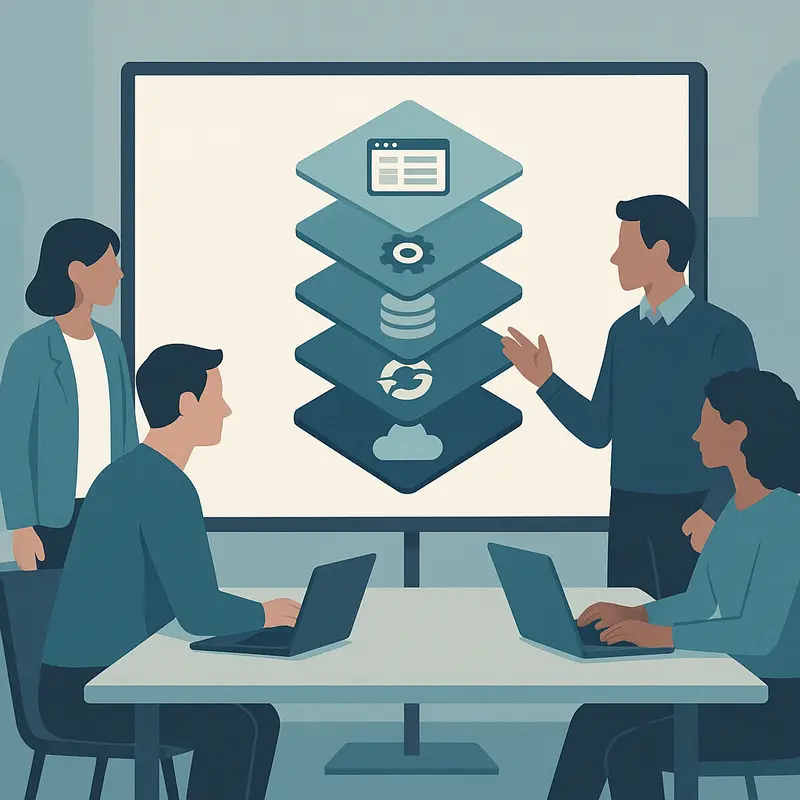
Choosing the right tech stack for your startup in 2026 is one of the most strategic decisions founders will make. The choices you make at the outset influence time-to-market, developer productivity, hosting and operational costs, scalability, and your ability to iterate quickly based on customer feedback. With cloud-native platforms, managed services, and a rapidly maturing AI/ML ecosystem, 2026 presents both new opportunities and new trade-offs for startup teams. This guide helps founders, CTOs, and technical product managers evaluate those trade-offs and land on a startup tech stack 2026 strategy that matches their product, team, timeline, and budget.
We’ll unpack how to choose tech stack components—frontend frameworks, backend languages, data stores, dev tooling, and deployment patterns—while grounding recommendations with real-world examples, cost considerations, and migration guidance. Whether you’re building the best tech stack for web app delivery, selecting a stack for SaaS, or defining a software architecture for startups that wants to scale, you’ll find clear criteria, side-by-side comparisons, and pragmatic hiring advice.
This article covers the core technical and non-technical evaluation criteria, a recommended shortlist of frontend and backend options, architecture patterns (monoliths, microservices, serverless), product-type specific stacks (web app, SaaS, e‑commerce, AI-driven), cost and TCO modeling, and practical tips for hiring or augmenting teams. We’ll also include tables comparing popular stacks and give a sample migration plan for when your initial choices need to evolve. Throughout, we reference industry data and real startup examples to illustrate trade-offs and outcomes.
By the end of this long-form guide you’ll be able to answer: What is the best tech stack for my product type? How will my stack affect hiring and costs? When should I pick serverless vs containers? And how can I minimize technical debt while preserving speed? If you need hands-on help implementing or iterating on your stack, consider reaching out to specialists in web application development and hire a dedicated team to accelerate your roadmap.
Why the Tech Stack Choice Matters for Startups in 2026
In 2026, technology choices have a multiplier effect: the right stack accelerates product feedback loops and scaling, while the wrong one yields mounting technical debt and recruiting friction. Cloud platforms and managed services reduced many operational barriers, but they also introduced a proliferation of choices—serverless functions, container orchestration, managed databases, and edge computing—that must be evaluated against your product goals. Choosing a startup development stack is no longer only about picking popular languages; it’s about assembling a cohesive platform that fits your go-to-market strategy and long-term vision.
Speed-to-market remains the single most important metric for early-stage startups. A lean Minimum Viable Product (MVP) built using the right stack can validate assumptions in weeks rather than months. However, studies show that reengineering a poorly chosen stack can be expensive: rebuilding core components, migrating data, and retraining staff adds months of delay and material cost. According to industry analyses, many startups end up paying a 15–30% premium in engineering time during the first two years due to suboptimal early decisions (according to Statista), which underscores why early choices must be strategic.
Scalability and maintainability are equally important. For example, a SaaS product with a monolithic architecture may be simple to build but become difficult to scale or iterate on as the product diversifies. Conversely, premature adoption of microservices often increases operational overhead for small teams. The key is to balance short-term velocity and long-term adaptability. The decisions you make about data modeling, API design, and deployment patterns now will determine how easily you can pivot offerings, onboard new engineers, and integrate third-party services later.
Finally, the technology you choose impacts your ability to attract talent. Developers often prefer modern toolchains—React, TypeScript, containerization, and managed cloud infrastructure—but also care about code quality and architecture. A thoughtfully chosen stack can increase hiring velocity and retention, while legacy or obscure choices may deter top candidates. If you need specialized hiring support, consider team augmentation options like hiring a dedicated team or hire AI engineers for AI-first startups.
Key Evaluation Criteria When Choosing a Startup Tech Stack
Selecting the right technologies requires a framework. The most effective founders evaluate candidate technologies across technical, organizational, and market dimensions. First, consider team skills: what technologies your current engineers know, and which skills you can realistically recruit for. A mismatched hire or a steep learning curve will delay launches. Use internal skills inventories and realistic hiring timelines as inputs to tech decisions—if your small team already has React and Node expertise, leaning into that ecosystem yields faster results.
Second, prioritize time-to-market. Managed platforms (PaaS, serverless functions, BaaS) can shrink development timelines dramatically by offloading infrastructure concerns. For example, using managed databases and identity platforms lets teams focus on core product features. Weigh recurring service costs against developer hours; in many cases, paying for managed services is cheaper than building and maintaining the equivalent in-house for a small engineering team.
Third, evaluate scale and operational complexity. Ask: what scale do we realistically need in 12–24 months? If you expect rapid, viral growth, design for horizontal scalability and consider separation of concerns early (e.g., decoupling API and background workers). But if you’re targeting a controlled market with predictable traffic, a simpler architecture reduces both cost and risk. Consider storage and data choices based on access patterns—OLTP vs OLAP, read-heavy vs write-heavy systems—and plan caching strategies accordingly.
Fourth, examine ecosystem and vendor lock-in. Choose frameworks and cloud services with robust ecosystems—libraries, community support, and mature tooling—so you aren’t hamstrung by brittle integrations. Consider open standards (REST, GraphQL, gRPC) and portable deployment artifacts (Docker containers) to keep future migration flexible. Document your dependencies explicitly and prefer components that minimize single-vendor lock-in, unless their benefits outweigh the risk.
Fifth, align with product-specific concerns like compliance, latency, and data sovereignty. For startups handling regulated data—healthcare, finance, or education—compliance requirements may narrow your choices to specific cloud regions, managed services that provide certifications, or languages with strong audit tooling. For global low-latency apps, edge compute and CDNs might be a priority. Finally, factor in cost: build TCO projections that include cloud spend, third-party services, developer salaries, and expected rework costs if migration is necessary.
Team Skills and Hiring Realities
When evaluating team fit, create a skills map showing current expertise versus desired future capabilities. It’s common to overestimate a small team’s bandwidth for learning new stacks on the job. Factor in onboarding time and training resources. If hiring externally, look at regional salary bands and candidate availability for your chosen stack: React and Node.js remain highly available, while some newer frameworks may have fewer experienced engineers. Consider partnering with a staffing specialist if you need to scale quickly—services such as hire ReactJS developers or hire Node.js developers can shorten hiring cycles.
Time-to-Market vs Technical Debt Trade-offs
Deliberately accept minimal technical debt to validate market assumptions quickly, then schedule refactors as features prove valuable. Use architectural guardrails—well-defined APIs, modular code, and good test coverage—to make later refactors manageable. If your roadmap includes rapid feature experimentation, favor stacks that minimize boilerplate and enable fast iteration such as serverless functions or managed databases. But always instrument your product for observability from day one to make future debugging and scaling easier.
Cost Modeling and Budget Constraints
Build simple cost models comparing self-managed versus managed components over 12 and 36 months. Include realistic estimates for developer time to operate undifferentiated plumbing (databases, CI/CD, monitoring). For early-stage startups, managed services often reduce total cost of ownership by saving developer hours. However, at scale, vendor costs can exceed self-managed solutions, so plan ahead and set thresholds where migration becomes economically sensible.
Recommended Backend and Frontend Technologies for 2026
By 2026, certain tech choices have matured into clear leaders for startups across categories. On the frontend, component-driven frameworks like React (with TypeScript) and SvelteKit are dominant for building interactive web apps. React’s ecosystem, tooling, and large talent pool make it a safe choice for startups that need predictable hiring and strong library support. TypeScript’s static typing reduces runtime bugs and improves maintainability—especially important when multiple engineers iterate quickly.
On the backend, Node.js and Python remain popular due to broad ecosystem support and speed of development. Node.js (with frameworks like NestJS or Express) is particularly strong for event-driven real-time apps and is widely used in SaaS and collaboration tools. Python (Django, FastAPI) excels for data-driven products, especially those that integrate AI/ML components. For higher throughput systems or teams prioritizing type safety and performance, Go and Rust are increasingly used, with Go being especially attractive for microservices and networked workloads.
Managed platform choices—serverless (AWS Lambda, Google Cloud Functions), managed Kubernetes (EKS, GKE, AKS), and PaaS (Heroku-style or Render) —should be selected based on operational experience and expected scale. Serverless is excellent for bursty workloads and simplifies provisioning, while containers on managed Kubernetes provide granular control when you need predictable scaling and lower cold-start risk. For many early-stage startups, a hybrid approach starting with serverless and moving to containers when needed is pragmatic.
Below is a comparison table of popular frontend and backend stacks, typical use cases, and trade-offs to help you choose a starting point.
| Stack | Typical Use Case | Pros | Cons | Example Companies |
|---|---|---|---|---|
| React + TypeScript / Node.js (Express/Nest) | General-purpose web apps, SaaS | Large talent pool, rich ecosystem, fast iteration | Can accumulate technical debt with poor discipline | Airbnb, Uber (parts) |
| SvelteKit / Node.js or Go | High-performance UI, smaller bundles | Excellent runtime performance, simpler state management | Smaller talent pool than React | Some startups and design-forward apps |
| Next.js / Vercel + Node.js | Server-rendered web apps, SEO-sensitive sites | Built-in SSR, good DX, edge rendering options | Can be opinionated; needs careful data-fetching strategy | Hulu marketing pages, many startups |
| Django / Python + PostgreSQL | Data-heavy apps, quick MVPs | Rapid dev, batteries-included, great ORM | Single-threaded by default; needs async for scale | Instagram (early), many startups |
| Go + gRPC / Kubernetes | High-performance microservices | Strong concurrency, low latency | Steeper learning curve for complex apps | Cloud-native infra companies |
Frontend: Choosing Between React, Svelte, and Alternatives
React with TypeScript remains the safe, industry-standard choice due to its ecosystem and hiring pool. If your startup prioritizes highly optimized payloads and minimal runtime overhead, Svelte or SvelteKit can be compelling—especially for content-rich sites and design-forward applications. Next.js (React) or frameworks that provide hybrid SSR and static-generation are excellent for SEO-sensitive web apps and marketing funnels that must convert visitors. Factor in your design and UX approach: for pixel-perfect products, close collaboration between product designers and frontend engineers (or working with a UI/UX design partner) will influence framework choices and component architecture.
Backend: When to Use Node.js, Python, Go, or Rust
Node.js is a versatile choice for general-purpose APIs, real-time applications, and teams with JavaScript expertise. Python is ideal if your startup leverages machine learning or heavy data processing, given the rich AI ecosystem. Go is a pragmatic choice for services that require concurrency and low latency with a straightforward runtime. Rust offers excellent performance and safety guarantees but has a steeper learning curve and is less common in small teams. The pragmatic path for many startups is to pick a primary backend language that aligns with hiring prospects and the app’s core needs, and to integrate other languages for specialized workloads where appropriate.
Tech Stack Selection by Product Type: Web App, SaaS, E-commerce, AI-driven
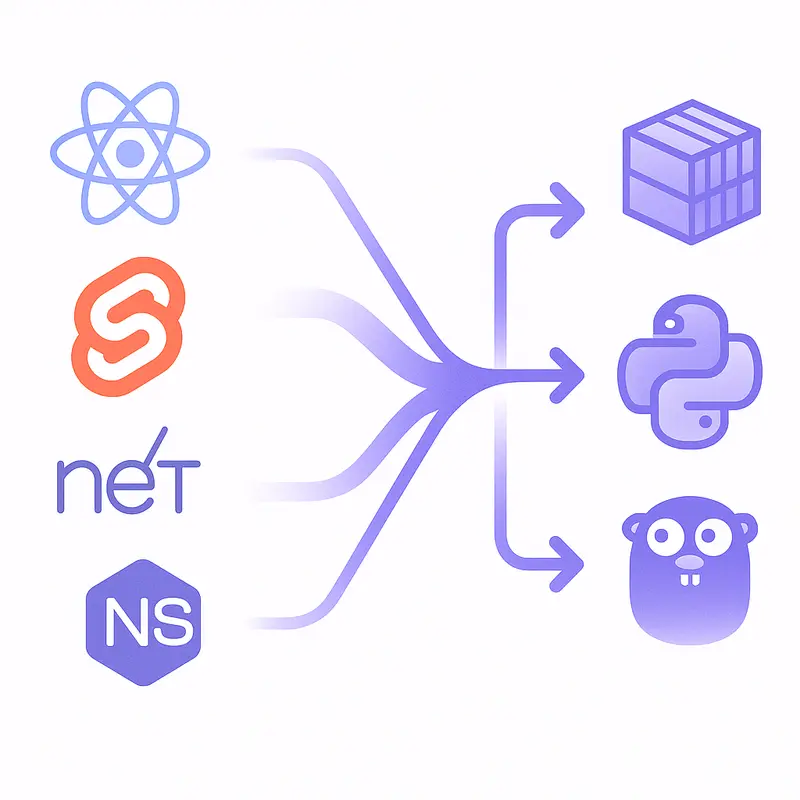
Different product categories impose different constraints and priorities. For web apps focused on interactive experiences, the best tech stack for web app projects often emphasizes frontend performance, hydration strategies, and edge delivery. For SaaS, reliability, API design, multi-tenancy, and observability are top priorities. E-commerce systems need robust transaction handling, payment integrations, and compliance support. AI-driven products require scalable data pipelines and infrastructure that supports model training and inference.
When building a web application focused on user interactions and engagement, prioritize frameworks and CDNs that minimize first-contentful paint and time-to-interactive. Use techniques like server-side rendering for initial content and client-side hydration for interactivity. Consider a frontend-first stack such as Next.js or SvelteKit paired with managed edge CDN providers, which reduce latency for global user bases. Integrate analytics and experimentation tooling early to test product hypotheses.
SaaS products require careful choice of data stores and tenancy models. For early stages, a single-tenant schema with logical separation is simpler and faster to iterate on. As you scale, consider multi-tenant designs with row-level tenancy controls or separate schemas per tenant, depending on isolation needs. Build APIs with strong versioning and backward compatibility practices. Observability (distributed tracing, metrics, structured logs) should be in place from day one to reduce MTTR (mean time to recovery) and support SLOs (service-level objectives).
E-commerce startups must prioritize reliability, payment compliance (PCI-DSS), and integration with third-party logistics. Managed payment platforms (Stripe, Adyen) reduce compliance burden; for storefronts, consider mature e-commerce platforms or headless commerce approaches like a lightweight frontend (React/Svelte) backed by a robust backend and a CDN for product assets. For turnkey commerce needs, evaluating custom e-commerce solutions or specialized vendors can save months of engineering time.
Web App Best Practices
For web apps, prioritize performance and accessibility. Use code-splitting, tree-shaking, and lazy-loading to reduce initial payload. Adopt progressive enhancement so content is available even if JavaScript fails. Implement robust client-side state management for complex flows and favor server-side data validation to maintain security boundaries. A/B testing and analytics should be integrated early, and conversion-focused teams should collaborate with engineering to instrument events and funnels for optimization tasks like conversion rate optimization.
SaaS Architecture Patterns
SaaS systems often benefit from an API-first approach: design APIs before building UI and automate client SDK generation where practical. For billing and subscription management, adopt mature SaaS platforms or managed services. Plan for multi-region failover if you need high availability, and create a clear strategy for backups, tenant data export, and GDPR/CCPA compliance. Use feature flags to release features progressively and reduce blast radius of new code changes.
AI-Driven Product Stack
AI-driven startups need data pipelines, model training orchestration, and inference serving infrastructure. Consider managed ML platforms for early experiments, and use feature stores and reproducible pipelines to avoid model drift. For inference, serverless endpoints or autoscaling containerized inference clusters are common. Tie model monitoring and data drift alerts into your observability stack so that performance degradations can be detected and remediated quickly. If your startup needs specialized AI talent, partner with teams that can deliver AI and machine learning solutions or consider hiring experts through hire AI engineers.
Architecture Patterns and Deployment Strategies for Startups
Architecture choices profoundly impact developer productivity and operational costs. Startups should start with the simplest architecture that meets requirements and implement architectural guardrails that make evolution safe. For many early-stage products, a modular monolith is a pragmatic default: it allows rapid iteration and enforces module boundaries without the operational overhead of distributed systems. As complexity grows, you can extract microservices around bounded contexts. The goal is to defer distribution until you have clear performance or scaling reasons.
Serverless architectures have become more robust and are a great fit for startups that need to minimize operational burden. Serverless functions handle event-driven workloads and scale automatically with traffic bursts, reducing the need to manage servers. However, serverless has trade-offs such as cold start latency and potential vendor lock-in. Use serverless for asynchronous tasks and APIs with moderate performance demands, and prefer container-based deployments for services where latency and control matter.
Containerization and managed Kubernetes are ideal when you want consistent runtime environments across dev, staging, and production. Managed Kubernetes services simplify operations, but you’ll still need SRE capabilities for networking, autoscaling, and resource management. Adopt Infrastructure as Code (IaC) early (Terraform, Pulumi) to keep environment provisioning reproducible. Pair IaC with CI/CD to automate deployments and enforce quality gates through automated tests and security scans.
CI/CD pipelines and observability are essential. Implement pipelines that include unit tests, integration tests, and vulnerability scanning. Use feature flags for releases and practice trunk-based development to avoid long-lived branches. Observability—metrics, logging, and distributed tracing—should be integrated for all services. Without observability, diagnosing production incidents can cripple a small team and erode customer trust.
Monolith First, Microservices Later
Starting with a monolith allows teams to iterate quickly and model domain logic centrally. Keep the codebase modular with clear boundaries. Use automated tests and maintain strict API contracts even within the monolith. When a module becomes a clear performance bottleneck or an independent business unit, extract it into a microservice. This staged approach minimizes early complexity and defers distributed systems challenges until you can invest in SRE capabilities.
Serverless vs Containers: A Decision Checklist
- Expected traffic pattern: bursty → consider serverless; predictable → containers.
- Latency requirements: sub-100ms → containers or edge; tolerant → serverless.
- Operational expertise: limited → serverless; otherwise → containers.
- Cost sensitivity at scale: serverless may be costlier for constant high throughput.
“Start small with simple architecture, instrument everything, and evolve your design as usage patterns reveal themselves.” — Common advice from early-stage CTOs
Hiring and Team Considerations for Your Startup Development Stack
Your tech stack decision must align with what you can hire and retain. Tech choices influence the candidate pool: popular, modern stacks (React + Node, TypeScript, Kubernetes) attract developers more easily than niche configurations. For startups with funding constraints or remote-first hiring models, consider hiring developers across regions and use robust onboarding and documentation processes. Staff augmentation and nearshore/offshore options can help accelerate development while controlling burn rate—resources like hire remote team services can be valuable for scaling quickly.
Define clear roles and responsibilities from day one. For example, name an engineering lead responsible for architecture and developer experience, a product engineer focused on core features, and a DevOps engineer for pipelines and reliability. Smaller teams benefit from cross-functional skillsets: full-stack engineers who can operate both frontend and backend are highly valuable. As you grow, specialize roles for SRE, backend, data engineering, and ML engineering.
Training and culture matter. Invest in knowledge sharing, code reviews, and pair programming to keep quality high and accelerate onboarding. Use engineering KPIs that promote sustainable development—cycle time, mean time to recovery, and service-level indicators—rather than purely lines of code or velocity points. If you prefer to augment in-house capabilities, services that offer dedicated hires for specific roles such as hire React Native developers or hire PHP developers can fill immediate gaps while you hire permanent staff.
Outsourcing vs Building In-house
Outsourcing can accelerate early product development and reduce time-to-market, but it requires strong product oversight and clear acceptance criteria. When using outsourcing partners, allocate product management resources to communicate priorities and review deliverables frequently. For core IP or features that require intimate product knowledge, keeping development in-house is often better to ensure long-term ownership and agility. Hybrid models—core team in-house, non-core components outsourced—are common and effective.
Recruitment Strategies and Compensation Considerations
When recruiting, highlight the stack’s learning opportunities and the product’s mission. Competitive compensation is crucial but can be balanced with equity, remote work flexibility, and a strong engineering culture. Use coding assignments that reflect real product problems and assess both technical skill and product judgment. For urgent hires, consider partner agencies or platforms to hire a dedicated team quickly without compromising long-term quality.
Cost Projections, TCO, and Migration Planning
Every tech stack decision should come with a minimal Total Cost of Ownership (TCO) projection. TCO must include direct cloud costs, third-party service subscriptions, and the ongoing cost of engineering to maintain and extend the stack. Build two scenarios: a conservative baseline for current needs and an aggressive growth scenario for 12–36 months. Include trigger points where a migration or refactor would be justified economically (e.g., monthly cloud costs exceeding X or latency above Y ms).
Migration planning is essential because most startups will need to evolve their stack. Create a migration playbook that documents data export/import processes, API compatibility layers, and feature flag strategies to switch traffic gradually. Use blue-green or canary deployment patterns when migrating services to reduce risk. Maintain a migration budget in your roadmap so that when scale or performance thresholds are exceeded, engineering can respond without derailing feature delivery.
Below is a simplified cost comparison example to illustrate TCO considerations. These numbers are illustrative; tailor them to your region and staffing model.
| Expense Category | Managed Services (12 mo) | Self-Managed (12 mo) | Notes |
|---|---|---|---|
| Cloud Compute & DB | $18,000 | $14,000 | Managed DB adds cost but reduces ops time |
| DevOps & Monitoring | $6,000 | $10,000 | Self-managed needs more engineer time |
| Third-party APIs & Auth | $4,800 | $3,000 | Managed auth and payments simplify compliance |
| Engineering Time (Ops/Support) | $60,000 | $80,000 | Self-managed stacks require more headcount |
| Total (12 mo) | $88,800 | $107,000 | Managed often cheaper for small teams |
As seen in the example, managed services can be more cost-effective for early-stage teams because they reduce the amount of engineering time spent on undifferentiated plumbing. However, at higher scale, self-managed infrastructure often becomes more attractive economically. Revisit your cost model at pre-defined milestones (revenue, traffic, or cost thresholds) and plan migration windows when needed.
For benchmarking and market trends, review reports on cloud adoption and developer ecosystem shifts. For example, macro-level cloud adoption statistics provide context on where managed services are heading and help set expectations around vendor ecosystems (Forbes analysis on cloud trends and McKinsey insights on digital acceleration).
Key Takeaways
- Prioritize speed-to-market: Use managed services and familiar frameworks to validate product-market fit quickly.
- Balance simplicity and scalability: Start with a modular monolith or serverless functions, then extract microservices when warranted.
- Align stack with hiring: Choose technologies that match your team’s skills and local talent market to reduce ramp time.
- Plan for evolution: Document migration paths, instrument observability, and set cost thresholds for refactors.
- Use expert partners: When in doubt, accelerate with experienced partners for development, UI/UX, or AI—consider UI/UX design and AI and machine learning solutions support.
Conclusion and Next Steps
Choosing the right tech stack for your startup in 2026 requires a pragmatic blend of technical foresight, team-alignment, and cost discipline. There is no single “best” stack—only the stack that best fits your product, timeline, team, and growth expectations. Start with a clear evaluation framework that weighs team skills, time-to-market, operational cost, and long-term flexibility. Prefer modular architectures and managed services to accelerate early validation, while keeping migration plans and observability in place to support future change.
If you’re preparing to build or re-architect a product, begin with a short discovery phase: map requirements, create an MVP technical plan, and produce a 12- and 36-month TCO projection. Use that plan to make deliberate choices around frontend, backend, data, and deployment. When you need specialized help—whether it’s building a scalable SaaS platform, designing pixel-perfect interfaces, or launching AI features—consider engaging expert teams. ePlanetSoft offers end-to-end capabilities from web applications to custom e-commerce solutions, and we can help you contact our team to jumpstart your stack selection and implementation. The right stack will not only get your product to market faster—it will set you up to scale efficiently and respond to customer feedback with agility.
Further Reading and Resources
- Statista: Cloud computing topic overview — market-level context on cloud adoption and services.
- Forbes: Future of cloud computing — industry perspective on cloud trends relevant for startups.
- McKinsey: Digital acceleration insights — insights on digital transformation and operational models.
Frequently Asked Questions
How to Choose the Right Tech Stack for Your Startup in 2026.
What is the ideal startup tech stack in 2026 for a SaaS product?
The ideal SaaS stack often includes React with TypeScript for the frontend, Node.js or Python on the backend, PostgreSQL for relational data, Redis for caching, and a managed cloud provider (AWS/GCP/Azure). Use observability tooling and feature flags to enable reliable releases and scalability.
Should early-stage startups use serverless or containers?
Early-stage startups often benefit from serverless for reduced operational overhead and faster iteration, especially for unpredictable traffic. Containers are better when you need fine-grained control over performance, anticipate stable high throughput, or require legacy dependencies.
How important is choosing a stack based on hiring availability?
Very important. A stack with a large talent pool shortens hiring time and helps you scale engineering faster. Align stack choices with the expertise of your existing team and the local or remote candidate market to avoid long ramp-up times.
When should a startup plan to migrate its tech stack?
Plan migrations when you hit defined thresholds (e.g., monthly cloud spend exceeding a predefined limit, sustained latency or error rate, or when new product lines require fundamentally different architecture). Always maintain migration playbooks and instrument systems to make migrations predictable.
How can I minimize technical debt while moving fast?
Adopt architectural guardrails, enforce API contracts, write automated tests, and implement observability from day one. Use feature flags for incremental releases and schedule regular refactor sprints tied to product milestones to keep technical debt manageable.
Ready to Grow Your Business?
Get a free consultation from our digital marketing and development experts. Let's discuss how we can help you achieve your goals.
- No commitment required
- Detailed technical roadmap
- Customized to your infrastructure
By submitting this form, you agree to our privacy policy. · 4,000+ businesses served · 24hr response · 98% satisfaction