Enterprise AI & Automation Agency | Eplanet Soft
SEO Strategy 2026: What Works Now (And What We Stopped)
SEO strategy 2026: A practical playbook for marketing managers — why old tactics failed after Google's AI Overviews and what works now to drive organic growth.
Key takeaways
- SEO strategy 2026 is about being part of the evidence bundle that AI features assemble — not just about top-10 rankings.
- Abandon quantity-driven tactics (mass links, keyword stuffing). Invest in authoritativeness, traceability, and micro-conversions.
- Measure AI citation rate, micro-conversion performance, and qualified leads from organic traffic.
- Technical health still matters: fast pages and clear structure increase the likelihood you’re chosen as a source.
- Choose agencies that can coordinate content, product landing pages, and analytics — not just write posts. At EPlanet Soft we combine SEO with product and analytics to deliver measurable results.
By Sanyam Singhal, Founder & CEO
Marketing managers: if your agency is still pitching the same checklist from 2022, this is for you. An effective SEO strategy 2026 looks nothing like a list of keywords and mass link churn. At EPlanet Soft we rebuilt our approach after Google’s AI Overviews shifted how search displays and sources answers. This article explains exactly what we stopped doing, what replaced it, and the practical steps you can apply in the next 30–90 days.
Why this matters: search now collapses discovery, answer generation, and action into fewer clicks. That changes where and how you earn organic attention.
What / Why: Why SEO strategy 2026 must change
The first rule of modern organic is simple: search is now answer-first, discovery-second. Google’s AI Overviews and similar features from other engines prioritize synthesized answers drawn from multiple sources. That evolution breaks two assumptions most agencies still use: that ranking pages in isolation is enough, and that quantity of links or exact-match keywords guarantees visibility.
At EPlanet Soft we experienced this shift first-hand. When AI Overviews began reflecting composite answers, we had to stop treating content and technical SEO as separate silos. We also stopped investing in low-quality link networks, keyword stuffing, and passive content calendars. Instead we focused on signal quality: authoritative context, semantic content structure, and measurable on-page actionability tied to intent.
what works in SEO 2026
Short answer: fewer tricks, more systems. Below are the core tactics that actually move the needle in 2026.
1. Intent-led topic clusters, not isolated keywords
As AI-overviewed snippets aggregate context across pages, you must present comprehensive, intent-aligned clusters. Build a hub page that answers the core question, then linked subpages that address adjacent intents (how-to, pricing, comparisons, troubleshooting). The cluster should map directly to the buyer journey.
Implementation checklist:
- Create an intent map for top 10 queries in your vertical.
- Produce a concise hub (900–1,500 words) optimized for clarity and a small set of target phrases, plus 3–6 supporting deep-dive pages.
- Use structured data where appropriate to signal sections, FAQs, and product info.
2. Source-level authority and traceability
AI Overviews and other generative features prefer sources that are transparent and citable. That means editorial standards, clear author attribution, and verifiable citations. If your content looks like a thin aggregator, it will be de-prioritized.
Practices that work:
- Author bios with credentials and cross-links.
- Inline citations and links to primary sources (studies, official docs).
- Maintain an editorial changelog for pages that are frequently updated.
3. Outcome-oriented content with measurable micro-conversions
Search results now deliver answers that remove the need to click—so your pages must justify that click with an immediate next-step. Micro-conversions (download, calculator, short assessment) are how you capture intent even when the snippet provides the answer.
Example micro-conversion tactics:
- Interactive calculators embedded on hub pages.
- Concise downloadable one-pagers in exchange for email.
- Short surveys that segment visitors into high-value follow-ups (sales or product demo).
AI search optimization
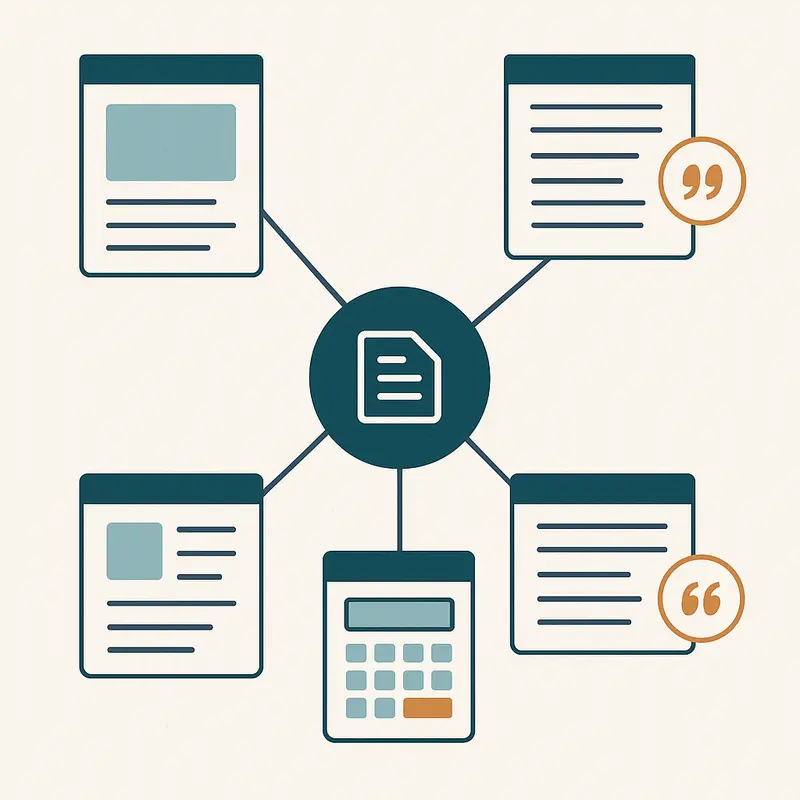
AI search optimization isn't about optimizing for an algorithm named 'AI'; it's about optimizing for the behaviors those AI features enforce: summarization, citation, and intent-respecting brevity.
Practical steps for AI search optimization
- Structure content so sections can be extracted: clear H2/H3 headings, short paragraphs, bullet lists, and labeled snippets.
- Surface primary claims early and support them with citations that AI can trace back to authoritative sources.
- Publish TL;DR summaries at the top of long pages—these are often what AI uses to craft a short answer.
Technical side: prioritize fast, crawlable pages and clear canonicalization. A fast, well-structured page is more likely to be selected as a primary source for an AI-generated overview.
For technical fixes, coordinate with web teams and use analytics to measure if your pages are being used as answer sources. EPlanet Soft’s SEO audits now include an AI-sourcing score as part of analytics and reporting, which helps prioritize pages that are likeliest to be referenced by AI summaries.
Read Google’s guidance on how search systems evaluate content for answer boxes: Google Search Central — AI Overviews.
Google AI Overviews SEO
Google’s AI Overviews changed the rules: instead of sending users to a single best page, the system synthesizes and cites multiple sources. That means you can no longer depend on ranking #1 for a raw query to capture the entire intent; you need to be part of the evidence ensemble.
How to become a sourced citation
- Be concise and factual. AI selectors favor pages with clear, verifiable assertions.
- Offer unique data or analysis—originality increases the chance you’re cited.
- Use proper schema markup for articles, datasets, product specs, and how-tos.
Two useful external analyses of how AI features changed SERPs: Search Engine Journal — AI Search 2026 and a trends roundup from SEMrush showing traffic redistributions in 2025: SEMrush — Search Trends 2025.
SEO agency for US businesses
If you’re evaluating an SEO agency for US businesses, ask them three direct questions:
- How do you measure being included in AI-generated summaries and citations?
- Can you show a playbook for micro-conversions on answer-focused pages?
- What is your editorial process for authoritativeness and transparency?
Many agencies still sell link-volume and thin content. For US B2B and SaaS, the winning agencies now combine technical speed, structured content, and original research. At EPlanet Soft we pair editorial rigor with product-minded analytics: our teams align SEO work with product landing pages and integrations built by our web applications group and designers from UI/UX teams to reduce friction from discovery to demo.
How procurement metrics should change
Stop buying SEO by ‘rankings’. Start buying SEO by measurable outcomes: citations in AI overviews, micro-conversion rates, qualified leads per organic channel, and sustained organic traffic growth to cluster hubs. We track these in dashboards built with our analytics and reporting service to show how content contributes to pipeline.
What we stopped doing (and what replaced each tactic)

Below are the legacy tactics we abandoned and their modern replacements—these are blunt contrasts because nuance matters.
| Old tactic (stopped) | Why it failed | What replaced it |
|---|---|---|
| Keyword stuffing and exact-match SEO | AI Overviews and semantic understanding ignore superficial repetition. | Topical depth + intent mapping; natural language and entity-based optimization. |
| Mass low-quality link building | Signals diluted; AI sources prioritize quality and traceability. | Targeted PR, research assets, and partnerships that produce citable references. |
| Thin, templated “SEO” posts | Not authoritative nor unique; easily ignored by synthesis models. | Original data, case studies, and concise hub pages with micro-conversions. |
| Ranking reports without outcome mapping | Rankings don’t reflect AI-sourced visibility. | Show evidence of being cited in AI summaries, micro-conversion uplift, and pipeline influence. |
Real example: a US client, 0 to 5K organic visitors in 3 months
This is a condensed, factual account of a recent client project executed by EPlanet Soft’s SEO team.
Situation: a US-based SaaS client had negligible organic traffic and depended on paid channels. Their 2023 playbook (keyword stuffing, exact-match domains, and mass link building) no longer worked in late 2025.
Timeline & approach (90 days):
- Week 1–2: Audit and intent mapping. We mapped top 30 queries and created 4 hub clusters covering product fit, ROI calculator, integration guides, and troubleshooting.
- Week 3–6: Content sprint. Created 4 hub pages + 12 supporting deep-dives. Each hub included a TL;DR, clear author attribution, citations, and one micro-conversion (interactive ROI calculator or short diagnostic).
- Week 6–10: Technical optimization. Reduced page load times to under 1.6s, implemented schema for articles and product info, fixed canonicalization, and improved crawl path with clear internal linking.
- Week 10–12: Promotion & partnerships. We ran targeted PR outreaches and co-authored a short industry analysis with a recognized partner to create citables.
Tools used: site crawl & audit (Screaming Frog + internal scripts), analytics (GA4 + custom dashboards), schema validators, and simple React-based interactive calculators. Our teams collaborated with product and design using our standard cross-functional workflow.
Outcome: organic traffic rose to ~5,000 monthly visitors by day 90. More importantly, 18% of those visitors engaged with a micro-conversion (leading to a 3.7% qualified-lead rate from organic). These metrics were tracked through the dashboards we built and handed over to the client.
Why it worked: we focused on being citable and useful—our hub pages answered the exact business question in a way AI Overviews could reference and users found the next step valuable enough to convert.
Note: EPlanet Soft continues to refine this playbook, pairing SEO strategy with the product and analytics teams to maintain and expand the traffic gains.
Measurement, KPIs, and team responsibilities
KPIs that matter in 2026:
- AI citation rate: percentage of targeted queries where your domain appears as a cited source in AI summaries.
- Micro-conversion rate on answer-focused pages.
- Qualified leads from organic traffic (not just raw sessions).
- Retention of organic visibility after major algorithm or AI feature updates.
Assign responsibilities like this:
- SEO lead — intent mapping, content strategy, and SERP monitoring.
- Editorial lead — original research, author management, and citations.
- Dev lead — page performance, structured data, and canonical controls.
- Growth lead — micro-conversions, dashboards (use analytics and reporting), and integration with paid channels where needed (paid marketing).
If you want to stop buying 2022 tactics and start executing a modern program, audit your hubs for intent coverage, add micro-conversions to answer-focused pages, and document source quality.
If you’re evaluating partners, ask to see their AI-citation tracking and examples where micro-conversions captured intent after an answer-first SERP change.
Final note: SEO isn’t dead — it’s smarter. The winners in 2026 are teams that treat search results as part of a conversion funnel and design content to be citable, useful, and immediately actionable.
If you’re ready to rebuild your approach, our SEO Services team at EPlanet Soft has implemented this playbook for SaaS and B2B clients in the US. We combine editorial rigor, technical execution, and analytics to show impact. Want to see a short audit or get a tailored 90-day plan? Contact us to get started — or book a consultation through our services page.
Also explore how we integrate SEO with product and site work via our web applications, UI/UX design, and ongoing website re-designing practices.
Frequently Asked Questions
SEO Strategy 2026.
What is the single biggest change in SEO strategy 2026?
The biggest change is that search now prioritizes synthesized, cited answers via AI features. That means being part of the evidence set (citable, authoritative content) and providing immediate micro-conversions matters more than traditional rank chasing.
How do AI Overviews affect organic traffic?
AI Overviews can reduce clicks to individual pages when they answer queries directly, but they also create opportunities: sites that are cited can capture qualified traffic and conversions by offering micro-conversions and unique, citable content.
Are backlinks still important in 2026?
Backlinks matter, but quality has trumped volume. Citations from authoritative sources, partnerships, and original research that others reference are far more valuable than mass low-quality links.
What metrics should marketing managers track now?
Track AI citation rate, micro-conversion rates on answer-focused pages, qualified leads from organic channels, and retention of visibility after major algorithm changes—alongside traditional technical metrics like page speed and crawl health.
How quickly can an organization see results with a modern SEO playbook?
Results vary by industry and baseline, but focused hub builds plus technical fixes and promotion can produce measurable uplifts in 60–90 days. For example, a US SaaS client moved from near-zero to ~5K monthly organic visitors within 3 months after implementing this approach.
Ready to Grow Your Business?
Get a free consultation from our digital marketing and development experts. Let's discuss how we can help you achieve your goals.
- No commitment required
- Detailed technical roadmap
- Customized to your infrastructure
By submitting this form, you agree to our privacy policy. · 4,000+ businesses served · 24hr response · 98% satisfaction