Enterprise AI & Automation Agency | Eplanet Soft
12 Questions to Ask Before You Hire a WordPress Developer in the USA
Hiring the right WordPress developer can make all the difference in your website’s success. Asking the right questions helps you evaluate their experience, technical skills, and reliability to make an informed hiring decision.

Key takeaways
- Ask to see live work that looks like your project, then find out which parts the developer actually built.
- Get the code, domain, hosting and admin access in your company's name before the final invoice is paid.
- Insist on a staging site, written change requests and a fixed update rhythm.
- Ask how they choose plugins and measure speed, rather than whether they "do security."
- Compare total project cost and post-launch support, not hourly rates.
If you plan to hire a WordPress developer in the USA, the interview will tell you more than the portfolio ever will. Twelve pointed questions about ownership, staging, security, speed, pricing and support separate a builder you can trust from one who leaves you with a fragile site and no keys.
Most bad hires don’t look bad in week one. The trouble shows up eight months later, when a plugin update breaks checkout, the original developer has gone quiet, and nobody can find the login for the hosting account.
We rebuilt a lot of WordPress sites that other teams started, and you can see the kind of work involved in our case studies. The same gaps show up again and again, and nearly every one could have been caught with a single question before the contract was signed. That’s the real answer to how to hire a WordPress developer well.
There’s also a numbers problem. WordPress runs roughly 41% of all websites, according to W3Techs usage data (2026). That means a huge pool of people calling themselves WordPress developers, which is great for choice and terrible for quality control.
What WordPress developer interview questions reveal real experience?
These first WordPress developer interview questions test whether the developer has solved your kind of problem before, not just WordPress problems in general.
1. Can you show me a live site you built that's close to what I need?
Screenshots hide everything that matters. Open the live site on your phone, since a mobile website that feels clunky quietly costs you leads. Tap through the menu, submit a form, and add something to the cart if it’s a store.
Picture a physical therapy clinic in Denver that needs online booking synced with its practice software. A developer with five beautiful restaurant sites is not the same hire as one who has connected a booking flow to a third-party API. Ask for the closest match, even if the client name is hidden under an NDA.
A strong answer comes with a link and a short story about the problem, the approach and what changed after launch.
Red flag. Only mockups or Dribbble shots for a project that’s mostly backend work.
2. Which parts of that project did you personally build?
Freelancers and agencies both present team output as a single body of work. That’s normal, but you need to know who you’re actually getting.
A strong answer is specific. “I built the custom listing post type and the search filter. A designer on the team did the mockups.”
Red flag. “We handled everything” with no detail, especially from someone pitching themselves as a solo expert.
3. What would you build my site with, and why?
The block editor, Elementor, a custom-built website and a headless setup each suit different teams. A store running WooCommerce also needs someone with real e-commerce development experience. The right pick depends on who edits your content, how often, and how much speed matters to your sales.
A strong answer ties the tool to your situation. “Your marketing lead updates landing pages weekly, so I’d use the block editor with a few custom blocks. It stays fast and she won’t need me for every change.”
Red flag. The same multipurpose theme for every client, bundled with a dozen plugins you never asked for.
Who owns the website when you hire a WordPress developer?
You should, completely. These two questions make sure that’s true on paper and in the code.
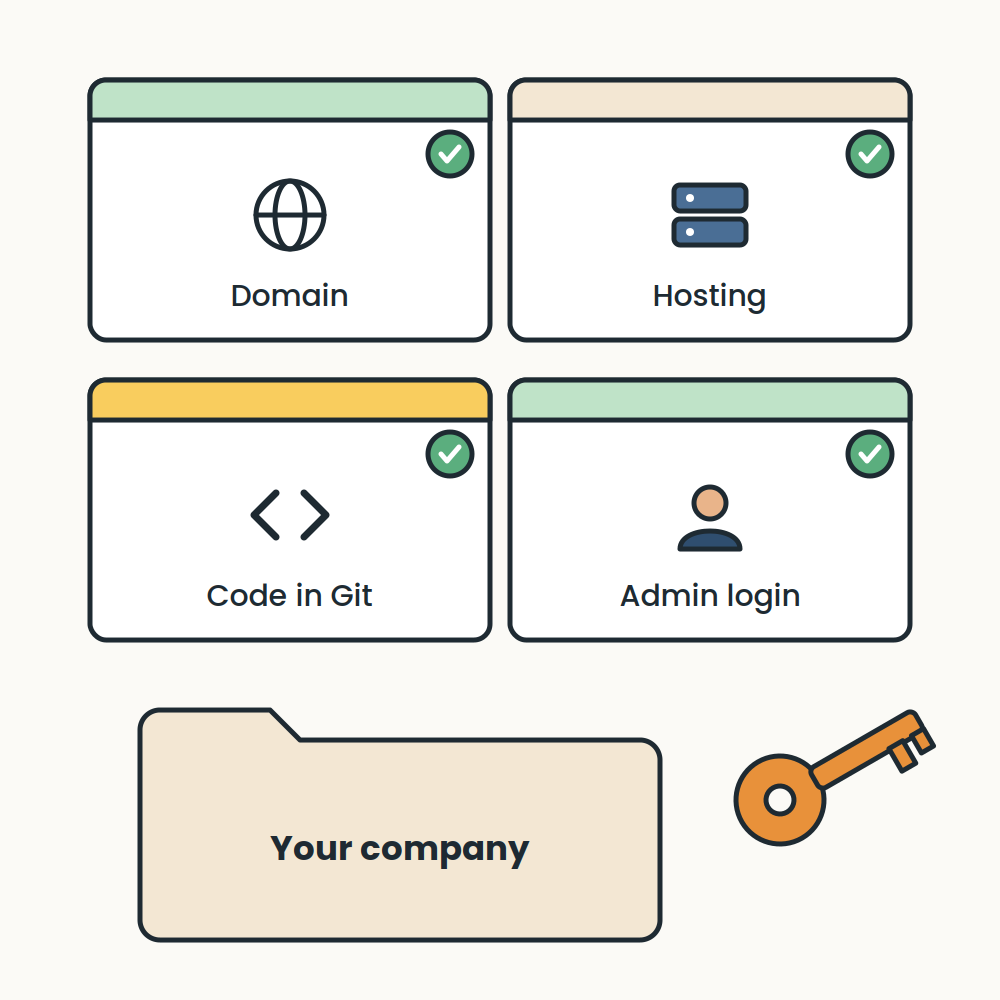
4. Will the code, domain, hosting and logins be in my company's name?
Here’s a story we hear in some form every few months. A home services company in Tampa has its domain registered under the old developer’s personal account. The relationship ends badly, and suddenly the business is negotiating to get its own web address back.
A strong answer covers four things. The domain and hosting are registered to your company, the code is pushed to a Git repository you control, you get your own administrator account, and the developer uses a separate login you can remove the day the contract ends.
Red flag. “I’ll host it on my server, it’s easier.” Easier for them, maybe.
5. Will custom features live in a plugin or in the theme?
This sounds like a nerd question. It isn’t. Anything built into the theme disappears the moment you redesign the site, which means paying twice for the same feature. Solid custom plugins are plain PHP work, so check that the person has genuine PHP development depth, not just theme setup skills.
A strong answer sounds like “Business logic goes in a small custom plugin, and the theme only handles how things look. I never edit WordPress or WooCommerce core files. Everything hooks in properly so updates don’t wipe it out.”
Red flag. “I’ll just drop it into functions.php.” Fine for a two-line tweak, a problem for anything your business depends on.
How do I know a WordPress developer has a safe working process?
Skill matters less than habits. A talented developer with sloppy habits will still break your live site on a Friday afternoon.
6. Do you build and test on a staging site first?
Your live site should never be the test environment. A staging copy lets you click through every change before customers see it.
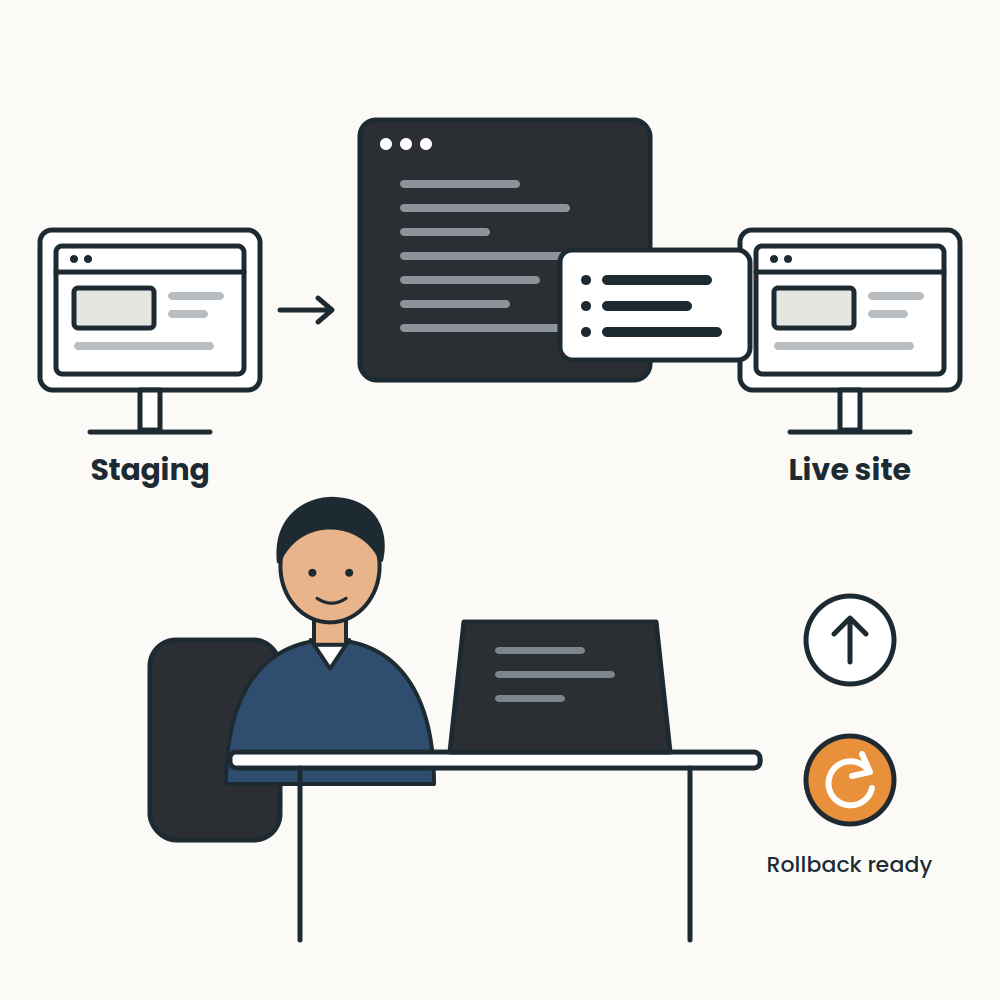
A strong answer is “Always. You review on staging, I take a full backup, then we push live with a way to roll back if anything looks off.”
Red flag. “I’ll be careful on the live site.”
7. What happens when I ask for a change halfway through?
Scope creep is where budgets quietly double. You will think of new ideas mid-project, everyone does, so the question is how they get priced.
A strong answer is a written change note with the extra hours and cost, sent before any new work starts. You approve it or park it for phase two.
Red flag. “Don’t worry, we’ll sort it out at the end.” That conversation never goes well.
8. How often will I hear from you, and during which hours?
Silence is the most common complaint about outside developers. Ask for a specific rhythm, such as a written update twice a week with a staging link.
If the team sits outside the US, this matters even more. Ask for a guaranteed overlap window, for example 9 to 11 a.m. Eastern, and a named person who answers during it. A well-run remote development team will offer this before you even ask.
A strong answer names the channel, the day and the time.
Red flag. “I’ll let you know when it’s done.”
What security and speed questions should you ask a WordPress developer?
These two questions expose the difference between someone who builds sites and someone who builds sites that hold up.
9. How do you decide which plugins go on my site?
WordPress core is rarely the weak spot. Plugins are. Patchstack’s State of WordPress Security in 2025 whitepaper logged 7,966 new vulnerabilities across the WordPress ecosystem in 2024, and 96% of them were in plugins.
So every plugin your developer adds is a small long-term risk you’re signing up for.
A strong answer mentions checking when a plugin was last updated, how many active installs it has, and its vulnerability history. For custom code, listen for permission checks, nonces, sanitizing input and escaping output. A good developer will also refuse to install “nulled” premium plugins, no matter how much it saves you.
Red flag. “WordPress is secure, and I’ll add a security plugin.” That’s a bandage, not a plan.
10. How will you measure page speed before and after?
Speed is measurable, so ask for numbers. Google’s Core Web Vitals guidance treats a page as good when Largest Contentful Paint is 2.5 seconds or less, Interaction to Next Paint is 200 milliseconds or less, and Cumulative Layout Shift is 0.1 or less.
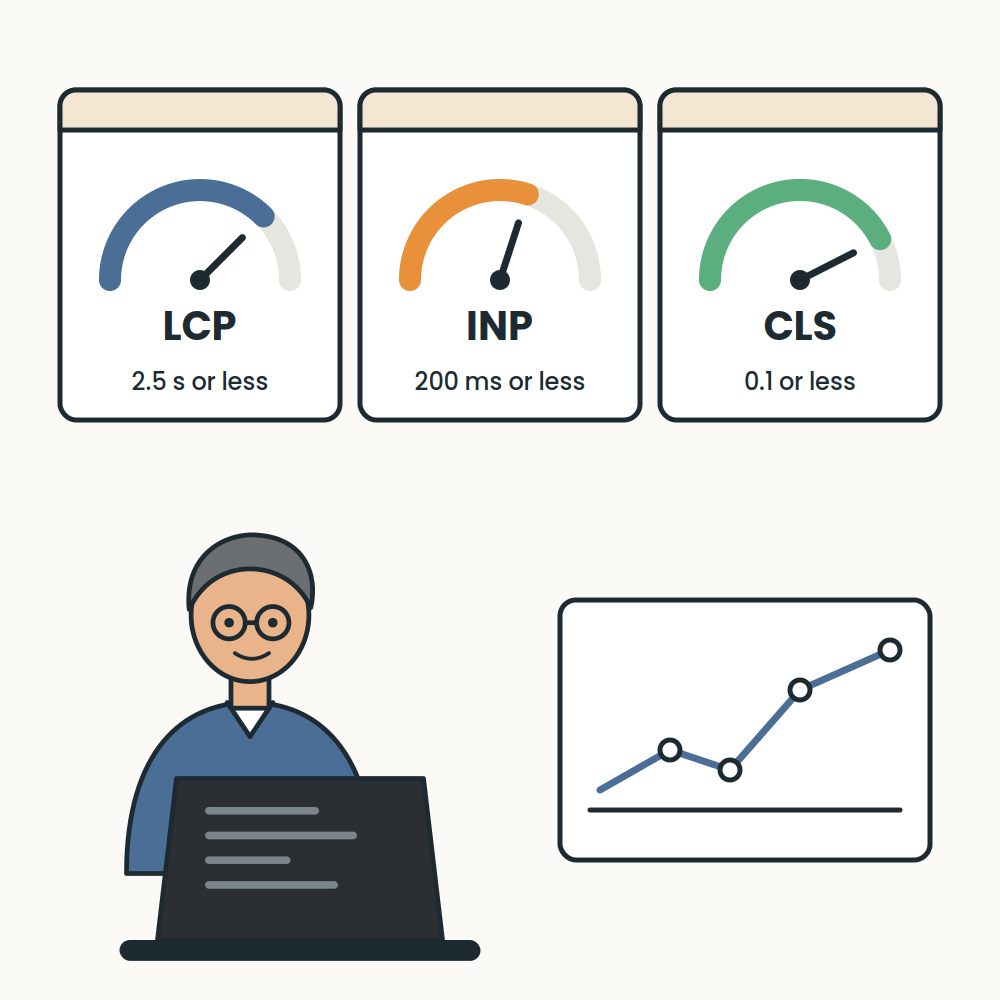
A strong answer starts with a baseline from PageSpeed Insights or Search Console, sets a target, and loads scripts only on the pages that need them. Example, a booking widget’s JavaScript loads on the booking page, not on every blog post. Faster pages also feed your SEO and conversion rate optimization work, so the effort pays off twice. Ask how they’ll track it afterward too, ideally through proper analytics and reporting.
Red flag. “Just add a caching plugin.” Caching helps, but it can’t fix a bloated theme or a slow database query.
How much does it cost to hire a WordPress developer in the USA?
There’s no honest single number when you hire a WordPress developer in the USA. A five-page service site, a WooCommerce store synced to an ERP, and a membership platform are three different jobs, and rates swing by city, seniority and hiring model. What you can control is how tightly the price is tied to a written scope. You can see how we structure engagements for American businesses on our services in the USA page.
11. Is this fixed price or hourly, and what exactly is included?
Both models are fine when they fit the work. Fixed price suits a clearly defined build. Hourly suits investigation work, like tracing why a slow site is slow.
A strong answer explains which model they picked and why, then backs the number with a scope document listing pages, features, integrations and the number of revision rounds.
Red flag. A surprisingly low fixed quote with no written scope. The scope will “grow” later, and so will the invoice. Another one is pressure to pay 100% upfront. A deposit plus milestone payments is the normal setup.
12. What support do I get after launch, and what does it cost after that?
Launch day is the start of the site’s life, not the end. Plugins update, PHP versions change, and something small will break at some point.
A strong answer spells out a bug-fix window after launch, say 30 days, then a clear monthly plan covering updates, backups, uptime monitoring and a set number of support hours.
Red flag. No answer at all, or “unlimited free support forever.” Neither one survives contact with reality.
What are the red flags when hiring a WordPress developer?
Any one of these is worth a follow-up question. Two or more and you should probably keep looking.
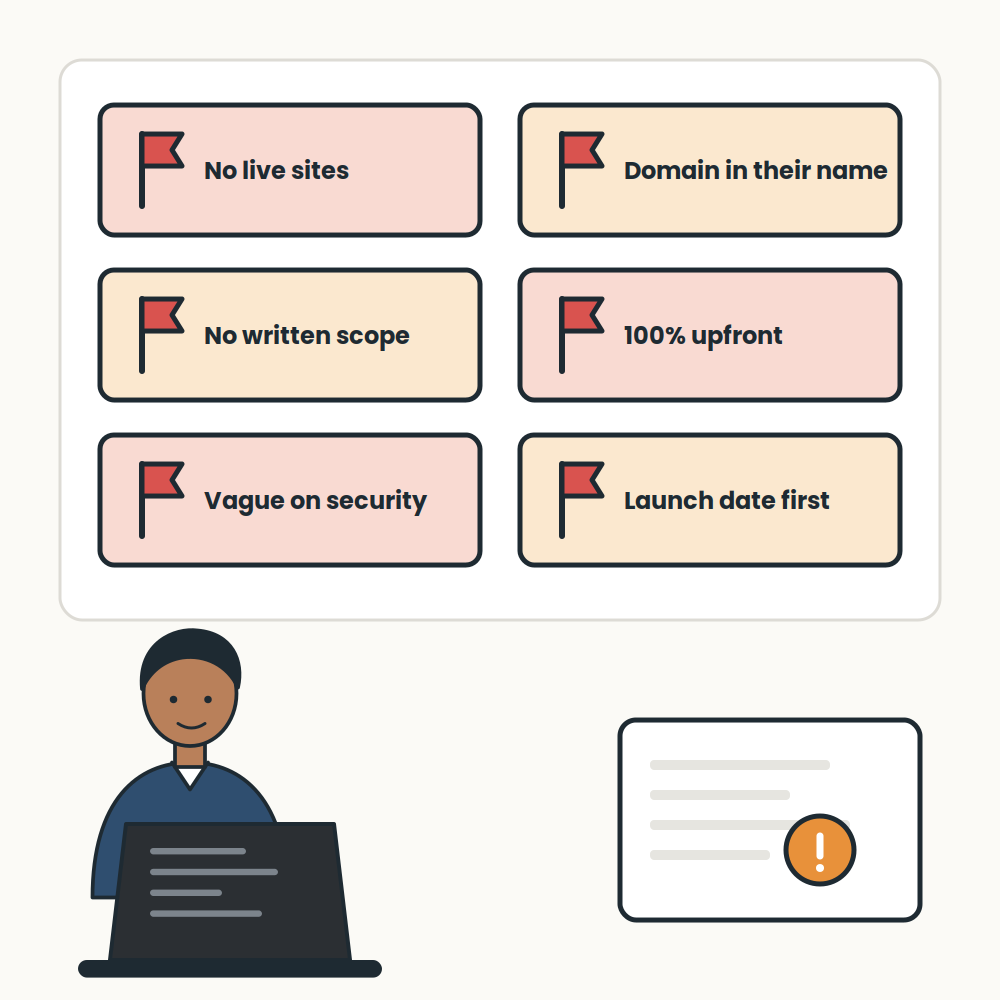
- They can’t show a single live site, only screenshots or templates.
- They want the domain or hosting registered in their name “to keep things simple.”
- The quote is far below everyone else’s and there’s no written scope.
- They push for full payment before any work is delivered.
- They go vague when you ask about backups, staging or security.
- They promise a launch date before they’ve asked a single question about your business.
Is a freelance WordPress developer for hire better than an agency?
Every WordPress developer for hire falls into one of three buckets. The right one depends on how much risk you can absorb if one person disappears for two weeks. Here’s how they compare.
Option | Who writes the code | If they get sick or quit | Best fit |
|---|---|---|---|
Solo freelancer | The person you interviewed | Work pauses until they’re back | Small, well-defined builds with a flexible deadline |
Agency | A team, sometimes subcontracted | Someone else picks it up | Larger projects that need UI/UX design, development and QA together |
A named developer working only on your project, backed by a team | The provider assigns a replacement | Ongoing work where you want one familiar face and a safety net |
Whichever route you take, run all twelve questions. A polished agency pitch can hide the same ownership gaps as a cheap freelancer. If you’re leaning toward the dedicated model, our piece on why a dedicated development team is a smart business move goes deeper.
How do you compare WordPress developers side by side?
Score every answer 0, 1 or 2. Zero means no answer or a red flag, 1 means acceptable but vague, and 2 means specific and convincing. Anyone scoring 20 or more out of 24 belongs on your shortlist.
Area | Questions | What earns a 2 |
|---|---|---|
Experience | 1 to 3 | Live, similar work, a clear account of their role, and a stack chosen for your team |
Ownership | 4 and 5 | Everything in your name, custom logic in a plugin, zero core edits |
Process | 6 to 8 | Staging first, written change notes, a set update rhythm with US-hour overlap |
Security and speed | 9 and 10 | A real plugin vetting routine and before-and-after speed numbers |
Money and support | 11 and 12 | Written scope, milestone payments, and a defined support plan after launch |
A few more questions to ask before hiring a web developer come up on almost every discovery call we run. Here are the short answers.
What's the next step once you have a shortlist?
If you’re early in the search, copy the twelve questions and the scorecard into a doc and send them, in writing, to three developers. Written answers are easier to compare and harder to fudge than a friendly video call.
If you’re already comparing options, you’re welcome to put Eplanet Soft through the same test. Our team has delivered 4,000+ projects over 11+ years, including the UniFirst website redesign, and works with US clients through our remote US office. See how we approach it on our hire WordPress developers page, or send your brief through the contact page and ask for answers to all twelve.
Additional resources
Frequently Asked Questions
SEO services in 2026.
Should I give a WordPress developer a paid test task?
Yes, if the project is large. A small paid task of a few hours, like fixing a known bug on a staging copy, shows you how they communicate, estimate and hand work back. Always pay for it.
What should I prepare before the first call?
A one-page brief does most of the work. Include what the site needs to do, your current hosting and key plugins, any tools it must connect to, a rough deadline and a budget range. You’ll get a sharper quote and spend less time back-and-forth.
Can I hire a WordPress developer outside the USA and still get US-hour support?
Yes, and many US companies do. The difference comes down to the overlap window, a named contact, and written contracts that cover ownership and confidentiality. Ask question 8 twice if you go this route.
How should a startup budget for SEO services?
Check them against something real. Ask for one past client you can speak with, look up their reviews on platforms like Clutch, and compare what they said in the interview with what ends up in the contract.
Related articles
Ready to move from rank chasing to revenue-driven SEO?
If you're looking to ship a measurable organic growth program that aligns with engineering sprints and sales outcomes, our SEO Services team at EPlanet Soft can help.
- No commitment required
- Detailed technical roadmap
- Customized to your infrastructure
By submitting this form, you agree to our privacy policy. · 4,000+ businesses served · 24hr response · 98% satisfaction