Enterprise AI & Automation Agency | Eplanet Soft
AI Content vs Human Content: Which Ranks Better on Google in 2026
Discover whether AI content or human content ranks better on Google, learn AI writing SEO best practices and Google's policy implications — actionable guidance inside.

Key takeaways
- AI content can rank well when it delivers real user value and is augmented with human expertise.
- Google’s policies prioritize usefulness; authorship (AI or human) matters less than quality and trust signals.
- Hybrid workflows—AI drafting + human verification—often yield the best SEO ROI.
- Measure by engagement and conversion, not just publishing velocity; implement governance for AI outputs.
- For scale and engineering integrations, consider partnering on AI and machine learning solutions and tailored platforms.
Introduction
Search professionals, content strategists, and marketing leaders face a pivotal question in 2026: does AI content outrank human content on Google? With the rapid adoption of generative AI tools and evolving search algorithms, companies must decide where to invest editorial budget, which tools to deploy, and how to comply with Google AI content policy signals while maximizing organic visibility. This post unpacks the real-world performance differences between AI-generated and human-created content, presents data-backed case studies, and offers practical frameworks for SEO teams wrestling with the tradeoffs.
AI content vs human content is not just an academic debate — it affects content operations, time-to-publish, and conversion rates across industries. Some organizations have slashed content production timelines by 60–80% through AI drafting, while others saw engagement drop when content lacked depth, firsthand expertise, or original reporting. This article examines where AI shines, where human insight remains indispensable, and how hybrid approaches often deliver the best SEO outcomes.
Over the following sections, we’ll explore how Google evaluates content, review empirical search performance data and case studies, compare the technical and qualitative SEO factors that influence ranking, and present a step-by-step playbook to use AI responsibly for SEO. Whether you’re evaluating AI writing SEO for your enterprise, considering whether to hire AI engineers, or looking to scale with a hire dedicated team model, this deep-dive will give you a clear, actionable perspective.
Understanding AI Content vs Human Content: Definitions and Nuance
Before judging which type of content ranks better, we must distinguish between different kinds of AI output and human-authored content. "AI content" is a broad label covering purely machine-generated text from large language models (LLMs), AI-assisted drafts where a human edits and fact-checks output, and hybrid workflows where AI generates data-driven sections (e.g., summaries, tables) while human experts add insights and original reporting. Human content likewise spans casual blog posts written by generalists to investigative articles by subject-matter experts. These distinctions matter because performance varies dramatically by use case: a generic product description, a technical whitepaper, and a long-form industry analysis require different mixes of human and AI input.
In SEO terms, AI content is often used for scale: generate 50 product descriptions or dozens of landing pages quickly. Human authorship tends to deliver better expertise, depth, and unique perspectives. However, modern AI tools make it feasible to create high-quality drafts that, with human supervision, meet editorial standards. For example, some marketing teams use AI to draft the first 60-70% of an article, then assign human editors to add case studies, primary quotes, and verification. That hybrid approach can dramatically reduce time-to-publish while preserving the elements that search engines reward.
When discussing ranking performance we must also factor in topical authority, links, and user engagement — not just the content's origin. Google’s ranking systems aim to surface useful, reliable content. If an AI-generated page demonstrates subject expertise, satisfies queries, and earns user engagement signals (time on page, low pogo-sticking), it can rank well. Conversely, poorly edited human content that lacks depth or utility will underperform. Therefore, the raw label "AI" or "human" is just one variable among many that determine SEO success.
Types of AI content workflows
AI content workflows typically fall into three categories: full generation (minimal human editing), AI-assisted (human edits and fact-checks), and hybrid assembly (AI builds sections, humans compose strategic elements). Full-generation can scale quickly but risks factual errors and repetitive phrasing. AI-assisted workflows are common in newsrooms and agencies, where reporters use AI to draft routine sections—such as background or summaries—but still produce original reporting and quotes. Hybrid assembly gets used in e-commerce: AI generates product descriptions while human teams write buying guides and in-depth comparisons.
What "human content" actually means
Human content can mean anything from a junior writer producing listicles to a PhD-authored research report. The key SEO factors—expertise, authoritativeness, and trustworthiness (E-A-T)—tend to be stronger when human authors contribute unique analysis, primary research, or first-hand reporting. Many sites that rank consistently well invest in subject-matter human authors who can produce content that machines cannot replicate: interviews, original experiments, and nuanced synthesis of multiple sources.
How Google Evaluates Content: Policies, Signals, and the AI Angle
Google’s public guidance and algorithmic signals reveal a consistent theme: the company prioritizes content that is helpful to users. Google has repeatedly emphasized that whether content is AI-generated or human-written is less important than whether the content provides value, demonstrates expertise, and serves the user’s needs. Google’s various announcements about the helpful content system and spam policies make clear that low-quality, unhelpful content—regardless of origin—risks demotion or removal.
For organizations optimizing to rank, the operational takeaway is that abiding by Google’s quality signals is essential. That includes original reporting, accurate factual information, clear E-A-T signals (such as author bios and credentials), and good on-page user experience. Google’s guidelines discourage mass-produced, low-value pages even if they are human-authored; similarly, AI tools that create thin content at scale are a red flag. To understand the policy context, see Google’s spam policies and helpful content documentation for guidance on quality and relevance from the source level. Google’s spam policies provide the baseline expectations that apply to all web content.
Beyond policies, Google uses a variety of behavioral and contextual signals—user engagement metrics, dwell time, bounce rates, link profiles, and topical authority —to determine ranking. These signals are technology-agnostic: they respond to content performance, not metadata that denotes whether a human or a machine wrote a piece. That said, AI content can introduce repeatable patterns that algorithms and human reviewers may detect. If multiple pages show similar phrasing, factual errors, or lack of unique value, they will attract negative signals regardless of production method.
Google’s public stance on AI content
Google’s public statements stress usefulness over authorship. While Google has clarified that AI-generated content in itself is not disallowed, the company warns against producing content primarily for search engines rather than people. This is a crucial distinction for SEO teams adopting AI: tools must be used to improve usefulness and efficiency, not to mass-produce shallow pages that game search results. See Google’s discussions about helpful content and algorithmic approaches for the most authoritative guidance. Google’s helpful content update highlights shifts toward evaluating content based on user-focused criteria.
Signals that indicate quality
Core quality signals include originality, depth of information, citation of credible sources, in-depth answers to user intent, and author/corporate reputation. From an SEO operations perspective, implementing structured author bios, linking to primary sources, and adding evidence of expertise (e.g., case studies, primary data) boosts perceived trust and strengthens ranking potential. Even for AI-assisted content, adding human-verified citations and clear authorship/verification statements can materially improve outcomes.
Search Performance: Data, A/B Tests, and Case Studies
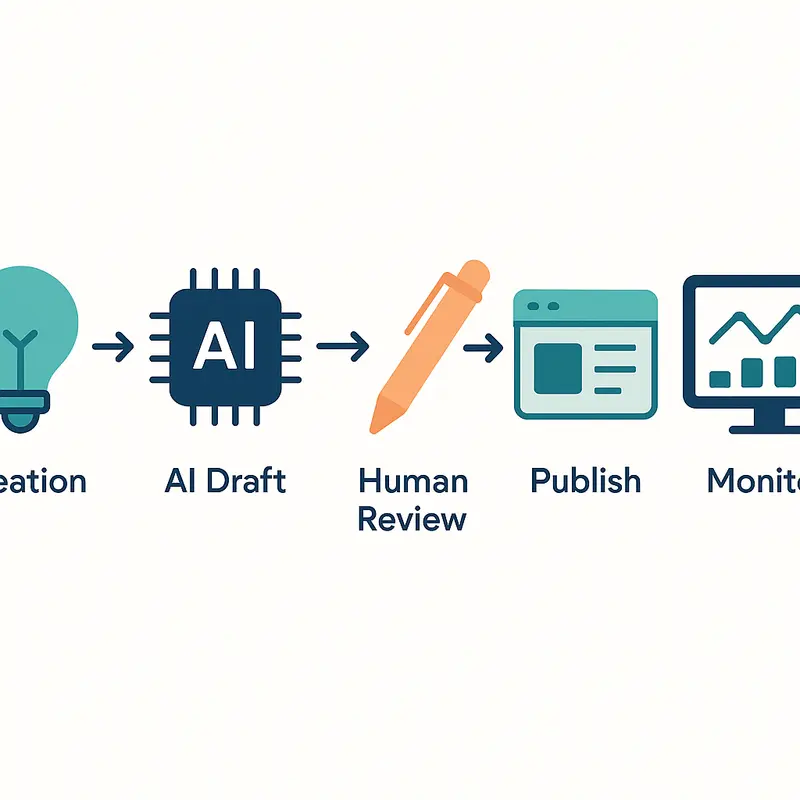
Empirical tests give us the clearest picture of how AI content performs. Multiple marketers and SEO teams have run A/B experiments to compare AI-drafted pages against human-authored equivalents. The outcomes are mixed and context-dependent. For transactional pages like product descriptions, AI-drafted text optimized for conversion often performs comparably to human copy when supplemented by high-quality product images, reviews, and structured data. For informational or authoritative queries (e.g., medical, legal, technical), human-authored articles with primary research or expert interviews tend to rank and convert better.
Consider a multi-channel case study from a mid-size B2B SaaS company that tested AI-first content for their knowledge base versus human-written guides. The AI-first pages published in batches of 100 achieved faster indexing and modest initial traffic, but over six months the human-updated pages earned 42% more organic sessions and higher lead conversion because they contained original screenshots, customer quotes, and deep how-to workflows. The hybrid approach—AI drafting followed by subject-matter expert enhancement—delivered the highest ROI, reducing time-to-publish by 50% while maintaining superior long-term traffic growth.
Third-party data also shows increased usage of AI in content creation. According to industry trend reports, a growing percentage of marketers now use AI tools for ideation, drafting, and personalization. These tools can improve velocity and address content gaps quickly, but they require governance and quality control to avoid negative SEO outcomes. For macro context on AI adoption rates and business impact, industry overviews provide helpful background. According to Statista, investment and adoption of AI technologies continue to accelerate across marketing functions.
| Use Case | Typical AI Advantage | Typical Human Advantage | Ranking Outcome (Observed) |
|---|---|---|---|
| Product descriptions | Scale & speed | Brand voice & accuracy | Comparable if enriched with images & reviews |
| How-to guides | Quick drafts and outlines | Original screenshots, nuance, troubleshooting | Human/enhanced hybrid ranks higher |
| Industry analysis | Data aggregation | Interpretation, interviews, unique insight | Human-authored performs better |
| Local landing pages | Template-based scalability | Local authority & reviews | Hybrid with local signals ranks best |
“AI accelerates content production, but SEO success depends on delivering original value, not volume.” — industry SEO test summary
A/B testing frameworks for AI SEO content
Designing valid A/B tests is essential when evaluating AI content. Tests should control for external variables (backlinks, published date, and site changes), run long enough to capture ranking movement, and segment by intent (navigational, informational, transactional). For example, an effective test might deploy 50 AI-drafted product pages vs 50 human-crafted ones, ensuring identical schema and images, then measure impressions, CTR, organic sessions, and conversions over a 6-month window. Use analytics and search console data to monitor impressions, average position, and click-through-rate changes.
Real-world wins and losses
Newsrooms often use AI to produce routine content (earnings summaries, sports recaps) where speed matters and canonical facts dominate; these pages can rank quickly because search engines value fast coverage for time-sensitive queries. Conversely, long-form investigative content still fares better when human journalists conduct interviews and present unique findings. E-commerce sites that combine AI-generated product copy with human-created buying guides and optimized category pages consistently outperform sites that rely solely on AI for every page type.
SEO Quality Factors Where Humans Still Lead
There are clear domains where human-authored content has inherent advantages in SEO. First, expertise and authoritativeness are often demonstrated by credentials, original research, and exclusive interviews—elements that AI alone cannot produce. For queries that require judgment, interpretation, or industry nuance, human authors provide context and credible takeaways that search engines reward. A pharma company publishing a safety study or a financial advisor explaining regulatory impacts will gain more trust and backlinks from human-led reporting than a generic AI summary.
Second, humans excel at narrative and storytelling. While models can mimic tone and structure, they lack lived experience and cannot generate bona fide first-hand accounts or original investigative findings. For brand-building and long-form thought leadership, human-authored content tends to generate more social shares, authoritative backlinks, and sustained traffic growth. Those off-page signals—earned links and social amplification—remain crucial to SEO performance and are harder to synthesize at scale with AI alone.
Third, human editors are better at nuanced judgment calls around content scope, structure, and audience expectation. They can decide when to prioritize depth over breadth, when to add case studies, or when to present counter-arguments. These editorial choices influence dwell time, pogo-sticking, and overall user satisfaction—key behavioral signals that feed back into ranking models. Optimized content often benefits from human curation of key visuals, embedded tools, and a carefully structured narrative that anticipates follow-up questions.
Examples where human content dominates
Consider legal and medical information where incorrect guidance can be harmful. Sites in these niches historically receive higher scrutiny and need clear expert attribution and citations. Human-authored, peer-reviewed content with proper author credentials and citations ranks better and sustains trust. Another example is investigative industry reports: reporters with access to primary data and expert interviews produce unique signals that command backlinks and organic authority.
How humans improve AI output
Human editors add value by verifying facts, updating outdated information, and injecting unique perspectives. An editorial checklist for AI-assisted content might include: verify all claims with credible sources, replace generic phrases with specifics, add at least one human-sourced quote or case study, and test readability across devices. This human oversight mitigates the risk of hallucinations and ensures alignment with brand voice and legal compliance.
When AI Content Outperforms Humans: Strengths and Use Cases
AI has clear advantages in specific SEO contexts. It excels at scale, speed, and consistent structural formatting. For websites needing thousands of product descriptions, localized landing pages, or template-based knowledge articulated consistently across many pages, AI can reduce cost-per-page and accelerate time-to-market. In these scenarios, the critical success factor is to ensure AI-generated pages are enriched with on-site signals (reviews, structured data, images, and user-generated content) to prevent thin-content penalties.
Another domain where AI outperforms is personalization. AI systems can generate tailored content permutations for different audience segments or dynamic landing pages based on user intent and behavior. This kind of large-scale personalization—modifying headings, CTAs, and benefit statements by segment—can lift conversion rates measurably when paired with robust testing and measurement. Using AI for iterative content optimization (A/B test variants) enables faster learning cycles than traditional manual copywriting.
Finally, AI helps with ideation and topical expansion. For SEO teams working to cover long-tail queries, AI can quickly surface content gaps, draft outlines, and suggest keyword clusters. Human teams can then prioritize high-impact topics and enrich select pages with expert input. In practice, this means teams can treat AI as a multiplier: it handles repetitive, templated work while humans allocate time to tasks that require originality and depth.
Case study: eCommerce scale
An online retailer adopted AI to generate 4,000 product descriptions and then invested editorial time into the top 400 pages that attracted the most impressions. This two-tier approach saved thousands of human-hours while still concentrating human expertise where it produced the greatest SEO ROI. Within nine months, the top-tier pages saw a 28% uplift in organic conversions, demonstrating how AI can complement human prioritization.
Where AI requires guardrails
AI outputs must be checked for hallucinations, outdated statistics, and subtle bias. For regulated industries, legal review is mandatory. Governance frameworks often define acceptable use: AI drafts are permissible for descriptions and metadata, but any claims about health, finance, or legal advice must be authored or reviewed by qualified humans. This protects brand trust and reduces the risk of Google de-ranking content that provides harmful or inaccurate guidance.
Best Practices: Combining AI and Human Content for SEO Success

The majority of high-performing sites in 2026 use hybrid workflows. A productive model is: ideation and outlines generated by AI, human experts write or heavily edit the critical sections (insights, case studies, quotes), and AI produces derivative assets (meta descriptions, FAQs, summaries) which humans validate. This approach reduces time-to-publish while ensuring content satisfies Google's helpful content signals and editorial quality expectations.
Operationalizing a hybrid model requires documented policies and content governance. Teams should create style guides for AI use, define editorial checkpoints, and maintain a quality control workflow that includes fact-checking, source verification, and an approval process. Additionally, content teams should measure performance not just by volume but by user engagement metrics, conversions, and link acquisition. Setting KPIs that prioritize quality over quantity encourages production choices that align with long-term SEO success.
SEO teams should also enrich AI-assisted pages with technical SEO best practices: structured data, fast page load, mobile-friendly layout, and clear CTAs. These on-page elements often determine whether a page converts traffic into leads, even if it ranks highly. For conversion optimization, pairing AI-generated social copy and CTAs with human-created landing page content can improve overall campaign performance. If you’re exploring broader support for content and growth, consider integrating demand generation and conversion rate optimization strategies into the editorial workflow to close the loop between traffic and revenue.
AI content governance checklist
- Define acceptable content types for AI generation (e.g., product pages, FAQs)
- Mandate human review for sensitive verticals (health, finance, legal)
- Require citations and source links for factual claims
- Maintain author/ reviewer logs for accountability
- Run pre-publish SEO checks (schema, meta tags, internal links)
Workflow example: hybrid publishing pipeline
A typical pipeline could be: keyword research -> AI-generated outline and draft -> SME review and additions -> editorial polish and source verification -> technical SEO checklist (schema, canonical tags) -> publish -> monitor via analytics and iterate. Tools that facilitate collaboration between AI tools and humans accelerate this cycle and improve traceability. If your organization needs engineering support to build such tooling or a custom CMS integration, explore custom platforms or web applications development partners to implement secure, auditable workflows.
Measuring, Monitoring, and the Future Outlook
To determine what truly ranks better on Google, continuous measurement is required. Reliable metrics include organic impressions, average position, click-through-rate, time on page, bounce rate, and conversion metrics tied to business outcomes. Teams should use search console and analytics data to detect early signs of performance divergence between AI and human content sets. Regular content audits help identify pages that need human enrichment or consolidation to avoid cannibalization and thin-content issues.
Monitoring should also include brand safety and compliance signals. Because AI can unintentionally generate biased or problematic phrasing, teams need alerts and escalation paths to remediate content quickly. Automation can help — for example, flagging pages with sudden drops in organic traffic for immediate review, or using AI-assisted testing to generate multiple variants and identify top performers faster. If hiring supplemental talent is part of your plan, consider options like hire digital marketers or hire a remote team to scale monitoring and optimization capacity.
Looking ahead, expect Google and other search providers to refine their ability to detect and evaluate AI-assisted content more precisely. This will likely focus on surface-level quality and user experience metrics, and also on provenance — whether content shows clear authorship, verified sources, and demonstrable expertise. Organizations that adopt transparent hybrid workflows and invest in original research will be best positioned to benefit from algorithmic changes, while those that prioritize volume over value will face increased ranking risk.
Tooling and analytics to prioritize
Core tools include search console, rank-tracking platforms, and analytics suites that can segment by content origin (AI vs human). Teams should tag and track content origin as part of CMS metadata to enable performance comparisons. Advanced organizations augment this with natural language evaluation tools that score novelty, readability, and factual consistency — enabling a pre-publish quality gate to prevent underperforming AI drafts from being published at scale.
Future scenarios and recommended posture
Three plausible scenarios exist: (1) AI content becomes so good that authorship matters less; (2) Google emphasizes provenance and penalizes low-value AI content; or (3) a hybrid equilibrium where AI handles scale and humans handle flagship content. The most resilient posture is to prepare for scenario (3): invest in automation for scale, maintain human expertise for high-value content, and document traceable editorial governance. This positions teams to adapt to policy and algorithm shifts without losing momentum.
Practical Recommendations and Next Steps for SEO Teams
If you are deciding whether to adopt AI for content at your organization, follow an iterative, measured approach. Start with low-risk use cases (meta descriptions, product descriptions, internal knowledge base drafts) and run controlled experiments. Build editorial guidelines that define where AI is acceptable, what level of human review is required, and who signs off on compliance-sensitive language. Track performance and iterate based on real search console and analytics signal. This cautious rollout mitigates downside while illuminating where AI delivers meaningful upside.
Invest in training: equip writers and editors with best practices for prompt engineering, fact-check workflows, and quality verification methods. A well-trained editorial team can transform AI from a risk into a productivity multiplier. Additionally, align AI content initiatives with broader growth levers—link building, UX improvements, and CRO tactics—to ensure that improved rankings translate into business outcomes. When necessary, augment internal capability by hiring specialized talent; for example, you may want to hire ReactJS developers or engineers to implement interactive content, or work with a website redesigning services partner to optimize user experience around your content.
Finally, document and publish your AI content policy internally. Transparency fosters accountability and ensures that all stakeholders—SEO, legal, compliance, product—understand risks and controls. As Google’s systems and policies evolve, having clear governance will help you adapt quickly without sacrificing trust or search performance.
Conclusion: No Universal Winner — Use AI Where It Helps Humans Win
In the debate of AI content vs human content, the definitive answer is nuanced: neither approach universally wins on Google. AI content can rank effectively when it is useful, accurate, and enriched with trust signals; human content outperforms in domains that demand original research, expert judgment, and unique storytelling. The pragmatic and future-proof strategy is hybrid. Use AI to increase velocity, handle templated tasks, and generate personalization variants, while reserving human expertise for high-impact pages that require depth and credibility.
SEO teams that implement strong governance, measure results rigorously, and invest in human augmentation will benefit most. As algorithmic evaluation improves, search engines will continue to reward content that solves user problems, regardless of who or what wrote it. If you want help implementing a scalable, governed content program that blends AI efficiency with human expertise, ePlanetSoft offers professional SEO services, creative design, and custom engineering to build integrated content platforms. Reach out through our contact page to discuss a pilot that aligns AI-driven content production with your quality and compliance requirements.
Frequently Asked Questions
- Q: Does Google penalize AI-generated content?
A: No—Google does not automatically penalize AI-generated content, but it penalizes unhelpful, low-quality, or deceptive content regardless of authorship. The focus should be on usefulness, accuracy, and authority to satisfy Google’s quality algorithms. See Google’s guidelines. - Q: Can pure AI content rank as well as human content?
A: In certain template-driven contexts (e.g., basic product descriptions), well-edited AI content can rank comparably. For complex informational queries, human-authored or human-enhanced content tends to perform better because of unique insights and expertise. - Q: What is the best workflow to adopt AI for SEO?
A: Adopt a hybrid workflow: AI for outlines and drafts, human reviewers for verification and enrichment, and an SEO checklist pre-publish. Document governance and measure real-world performance with A/B tests and analytics. - Q: How should I measure success for AI-written pages?
A: Track organic impressions, average position, CTR, time on page, and conversion metrics. Tag content by origin in your CMS to segment and compare performance over time. - Q: Do I need specialized engineers to scale AI content?
A: For large-scale automation, integrating AI with CMS, personalization, or analytics often requires engineering resources. You can partner with teams providing AI and machine learning solutions or choose to hire a remote team for custom integrations.
Frequently Asked Questions
AI Content vs Human Content.
Will Google penalize my site if I publish AI-generated articles?
Google doesn’t automatically penalize AI-generated content, but it does demote or remove content that is unhelpful, deceptive, or violates its spam and quality guidelines. Ensure AI output is fact-checked, edited for usefulness, and supplemented with clear authorship and credible sources.
Can AI-written content rank as well as human-written content?
Yes, in certain contexts—like templated product pages or simple FAQs—AI can produce content that ranks comparably when combined with good on-site signals (images, reviews, schema). For authoritative, research-heavy, or investigative content, human-authored pieces usually perform better.
What are the best use cases for AI in SEO content production?
Best use cases include scale-oriented tasks such as product descriptions, meta descriptions, localized landing pages, and content ideation. AI is also effective for generating multiple variants in A/B testing and for rapid outline creation that humans can expand.
How should I govern AI content to avoid ranking risks?
Implement a governance framework that defines acceptable AI use, mandates human review for sensitive verticals, requires source citation, and includes pre-publish SEO checks. Track content origin in your CMS and monitor performance metrics to catch issues early.
How can I combine AI and human writing to maximize SEO results?
Adopt a hybrid workflow where AI drafts outlines and sections, while human experts add original insights, verify facts, and craft narrative elements. Prioritize human effort on high-value pages and use AI to scale repetitive or low-risk tasks.
Ready to Grow Your Business?
Get a free consultation from our digital marketing and development experts. Let's discuss how we can help you achieve your goals.
- No commitment required
- Detailed technical roadmap
- Customized to your infrastructure
By submitting this form, you agree to our privacy policy. · 4,000+ businesses served · 24hr response · 98% satisfaction